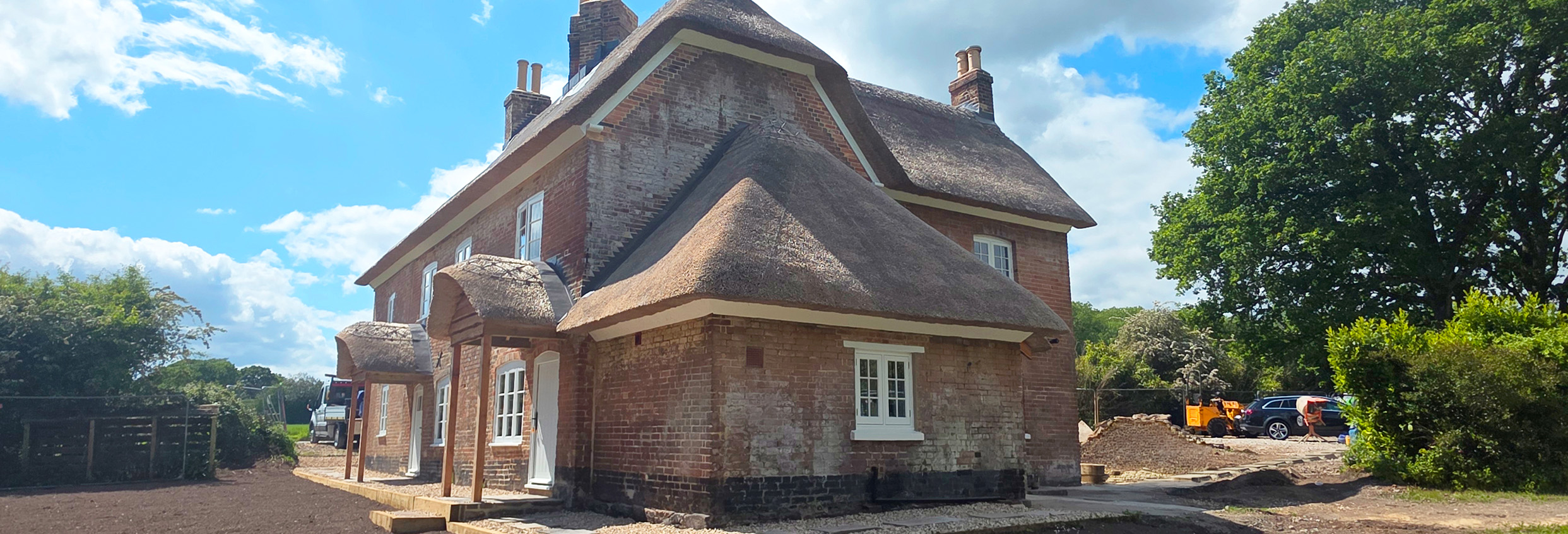
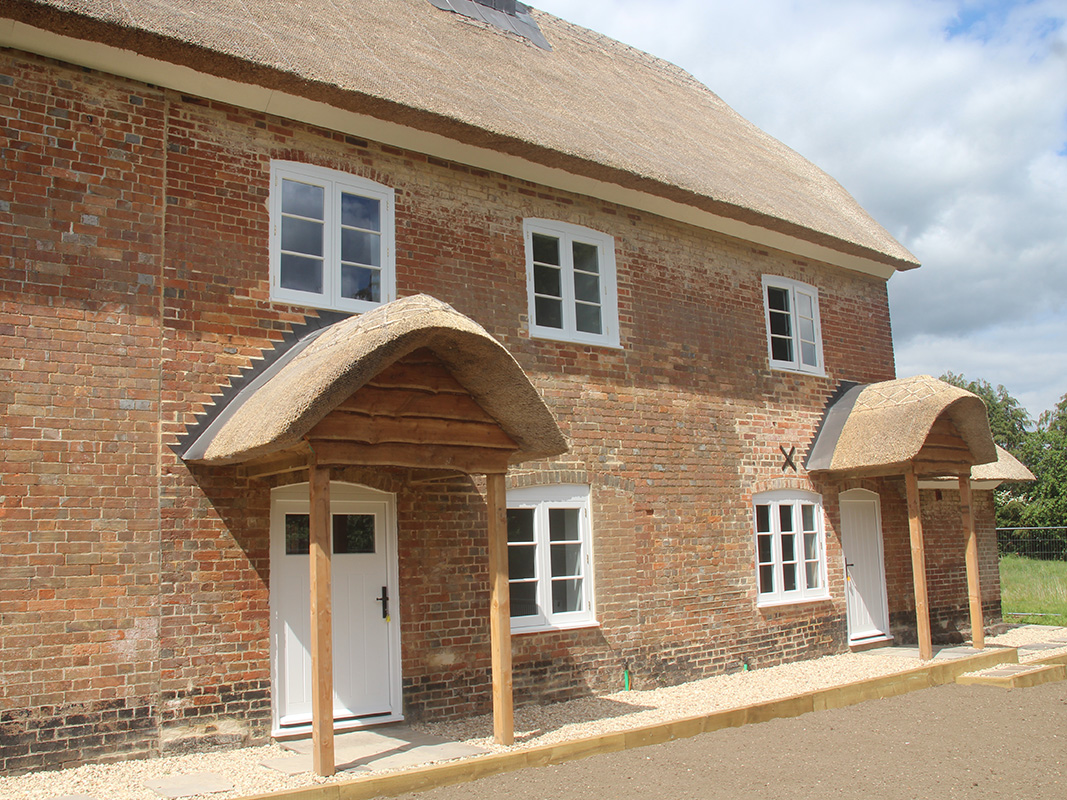
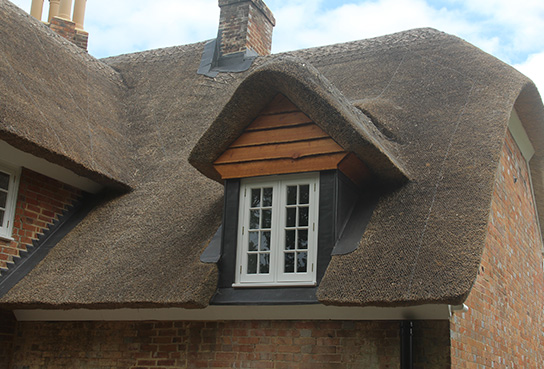
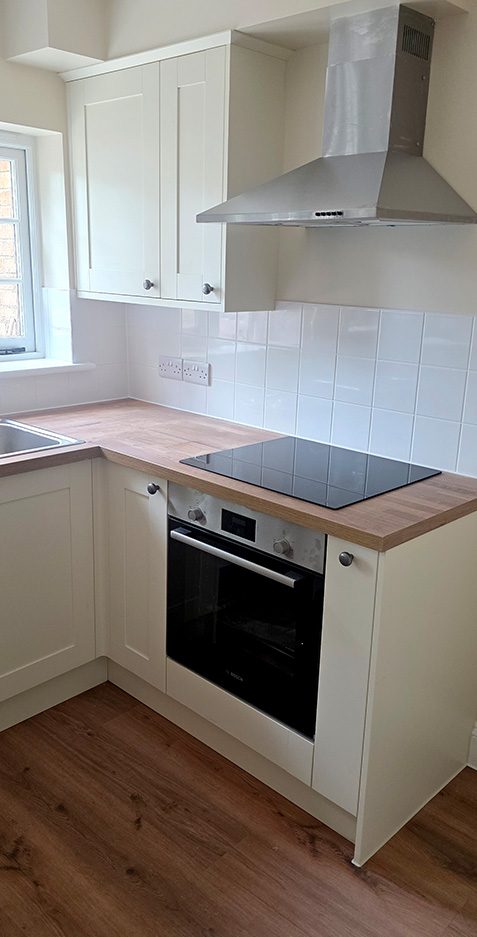
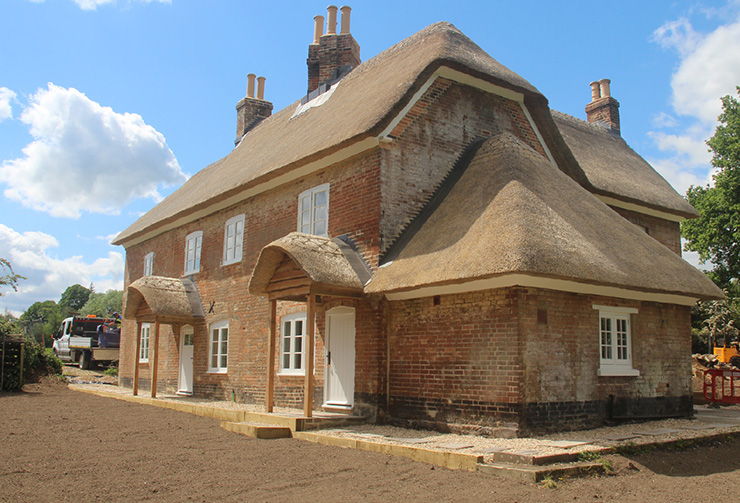
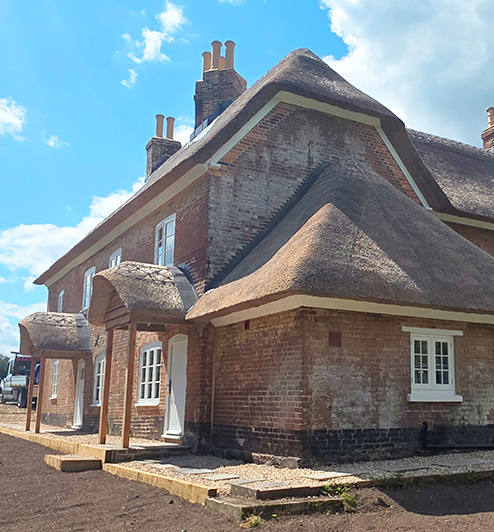
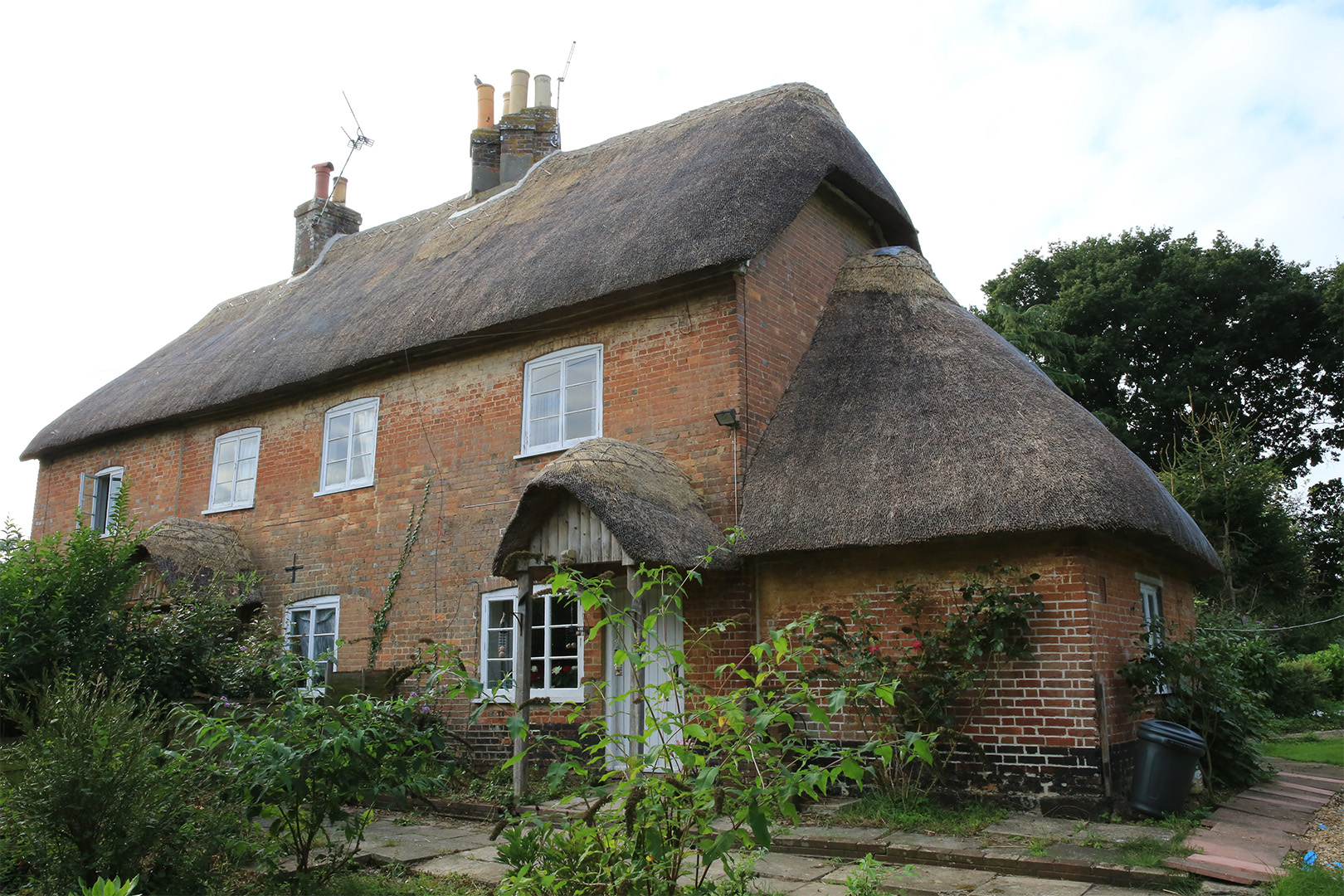
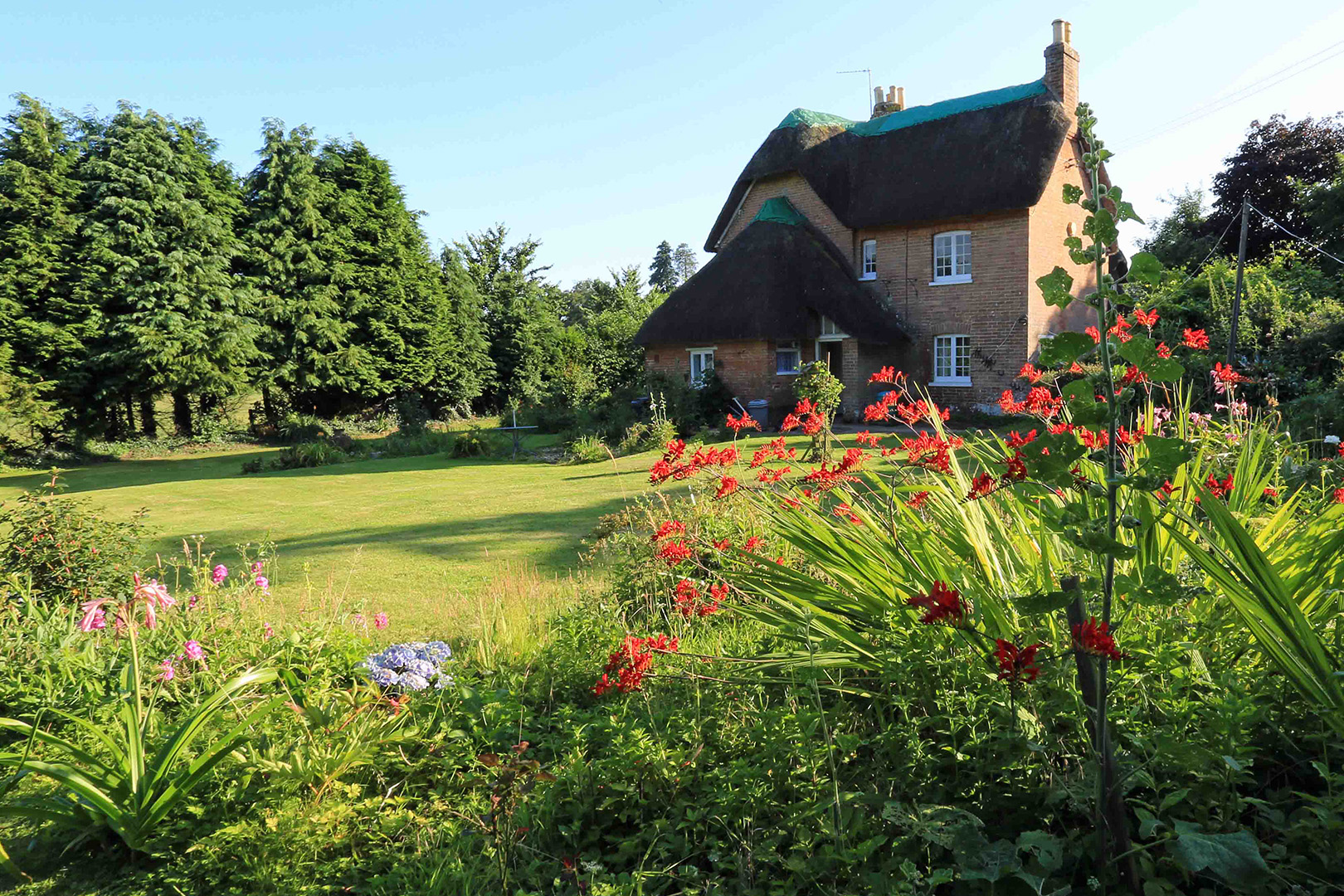
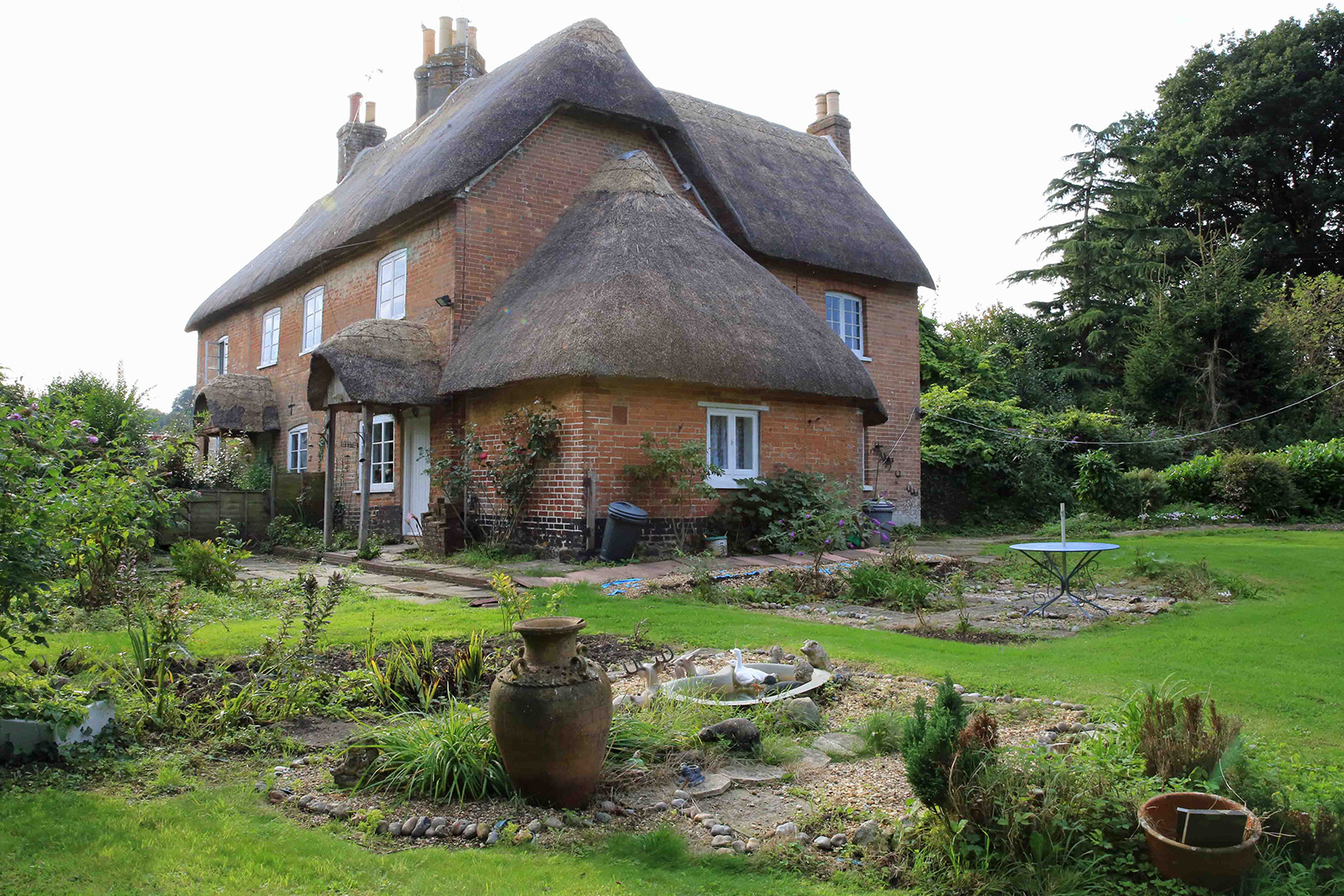
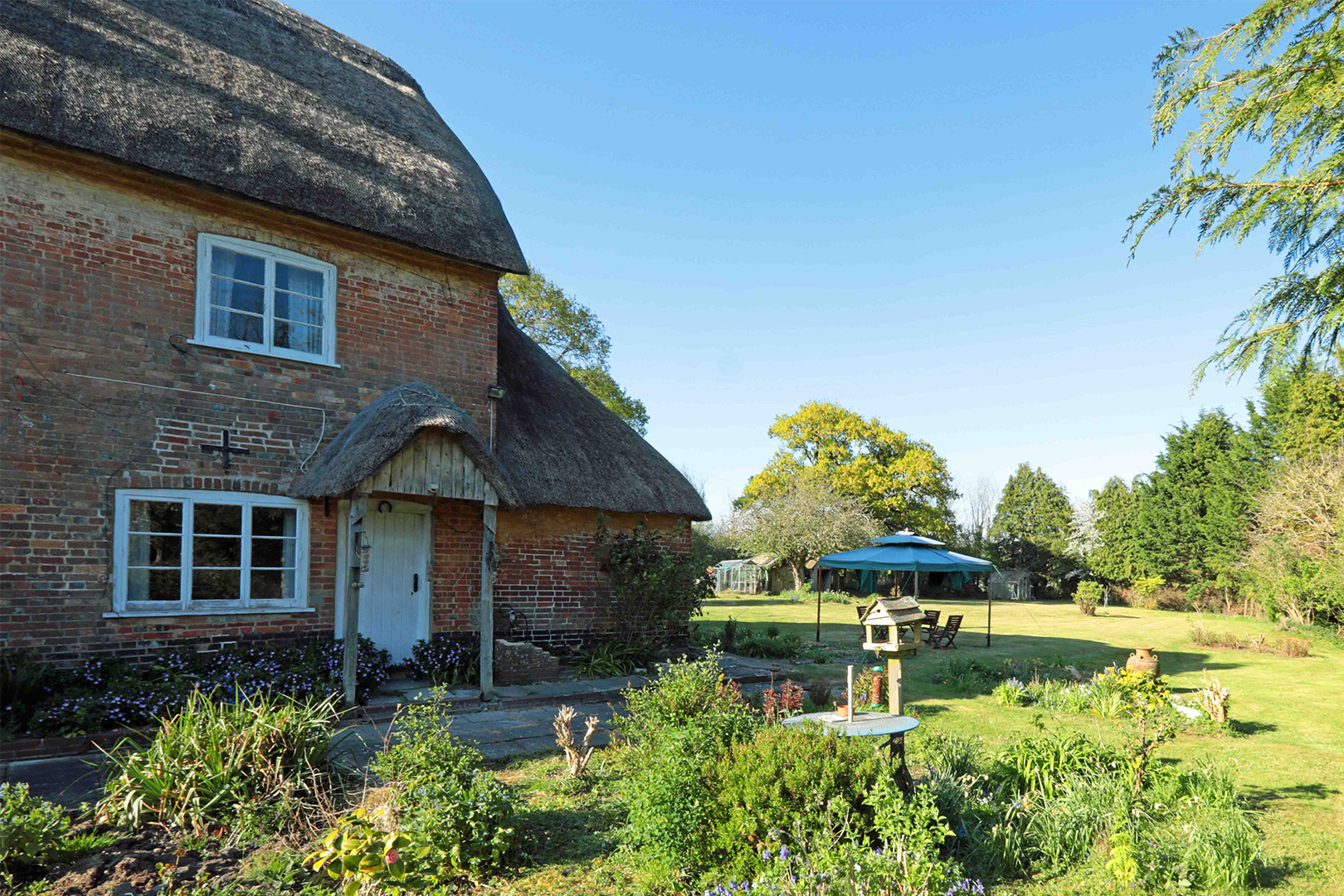
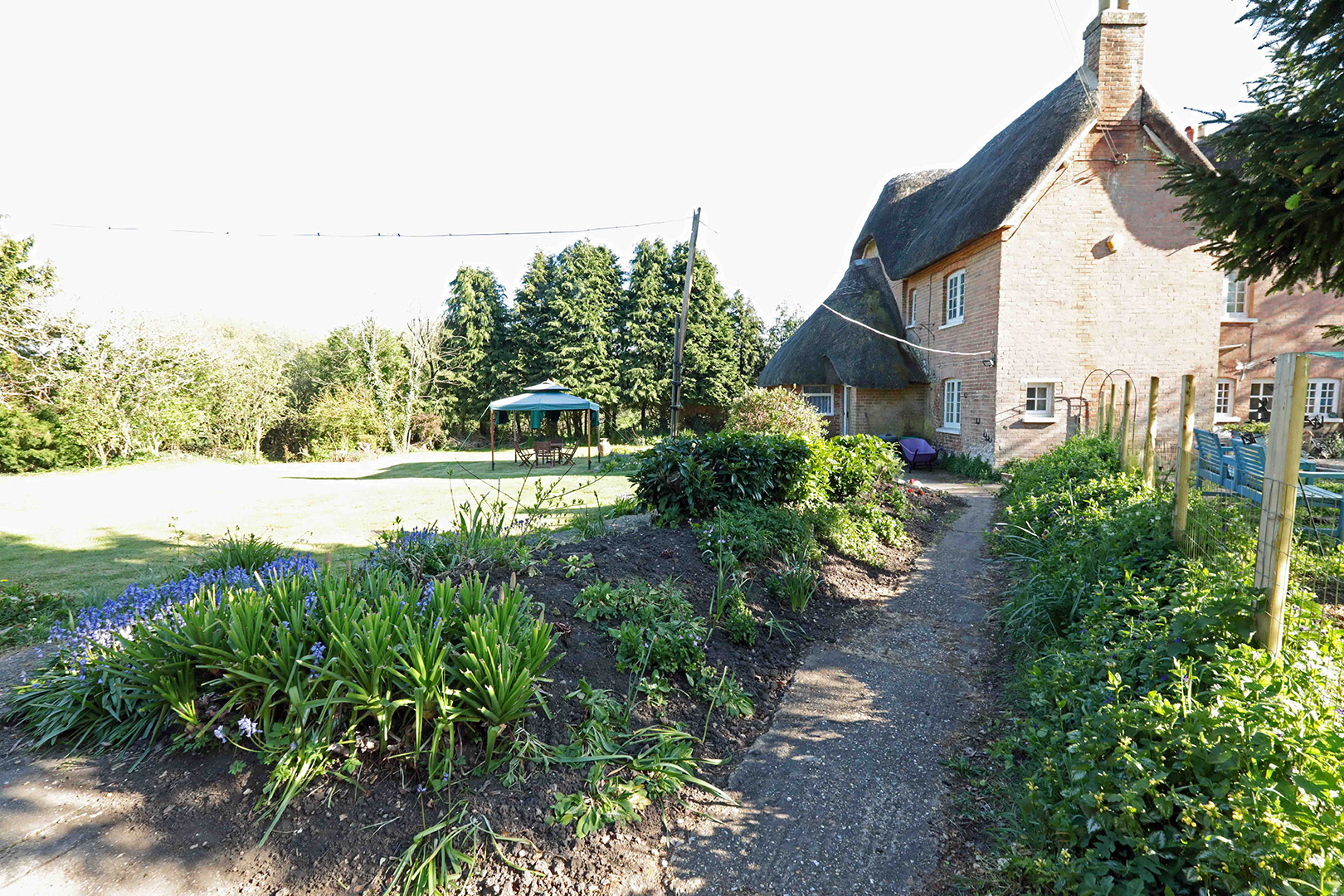
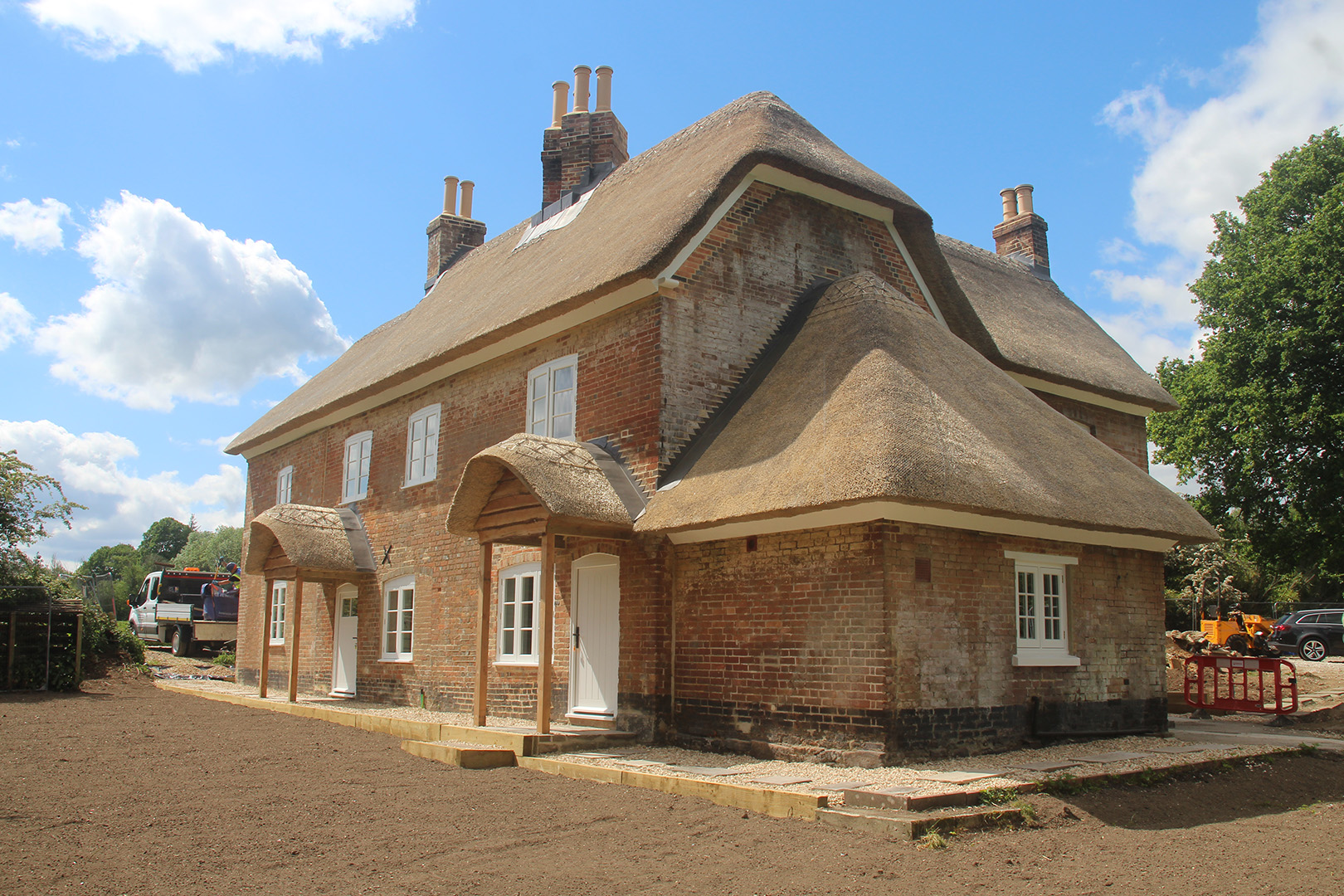
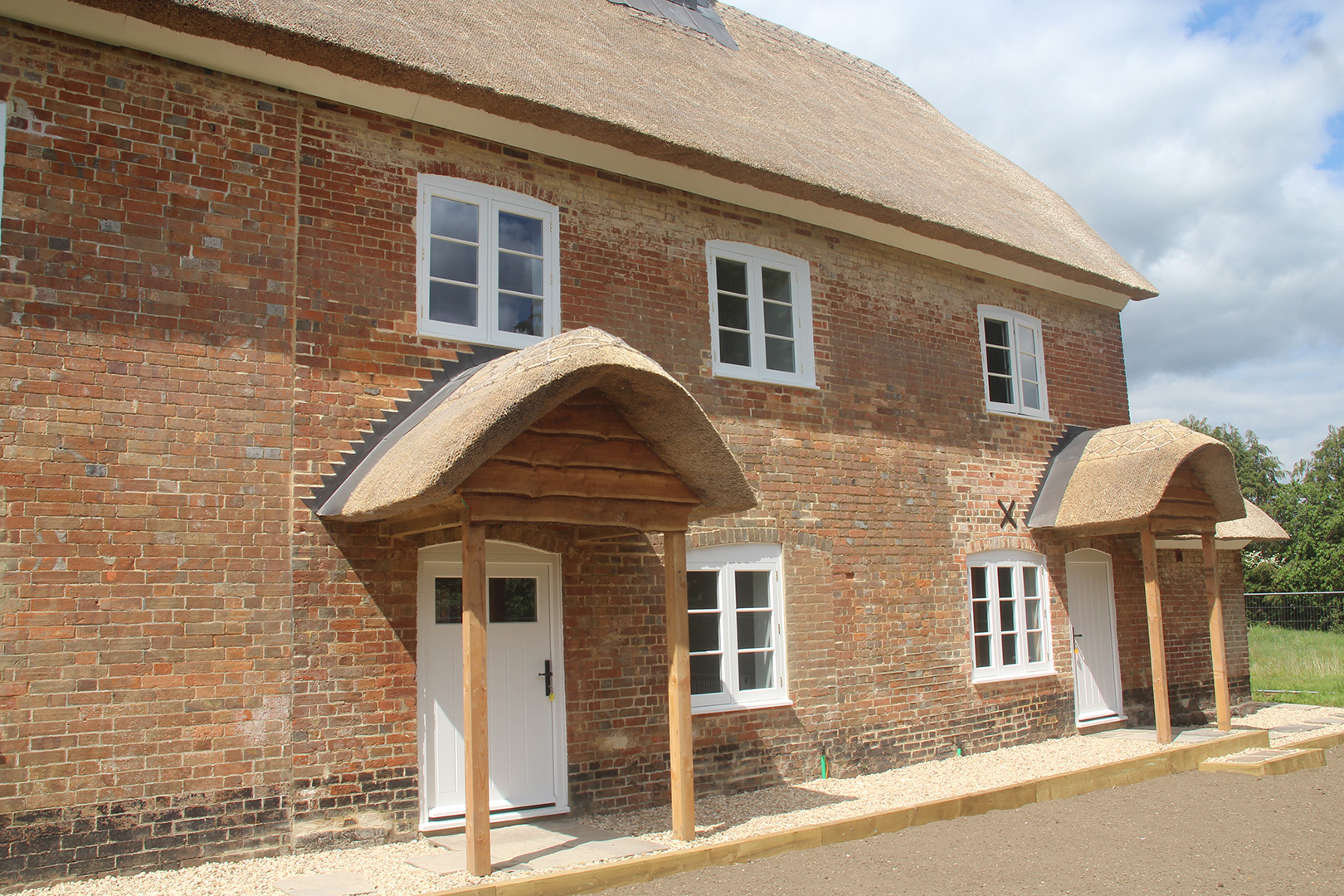
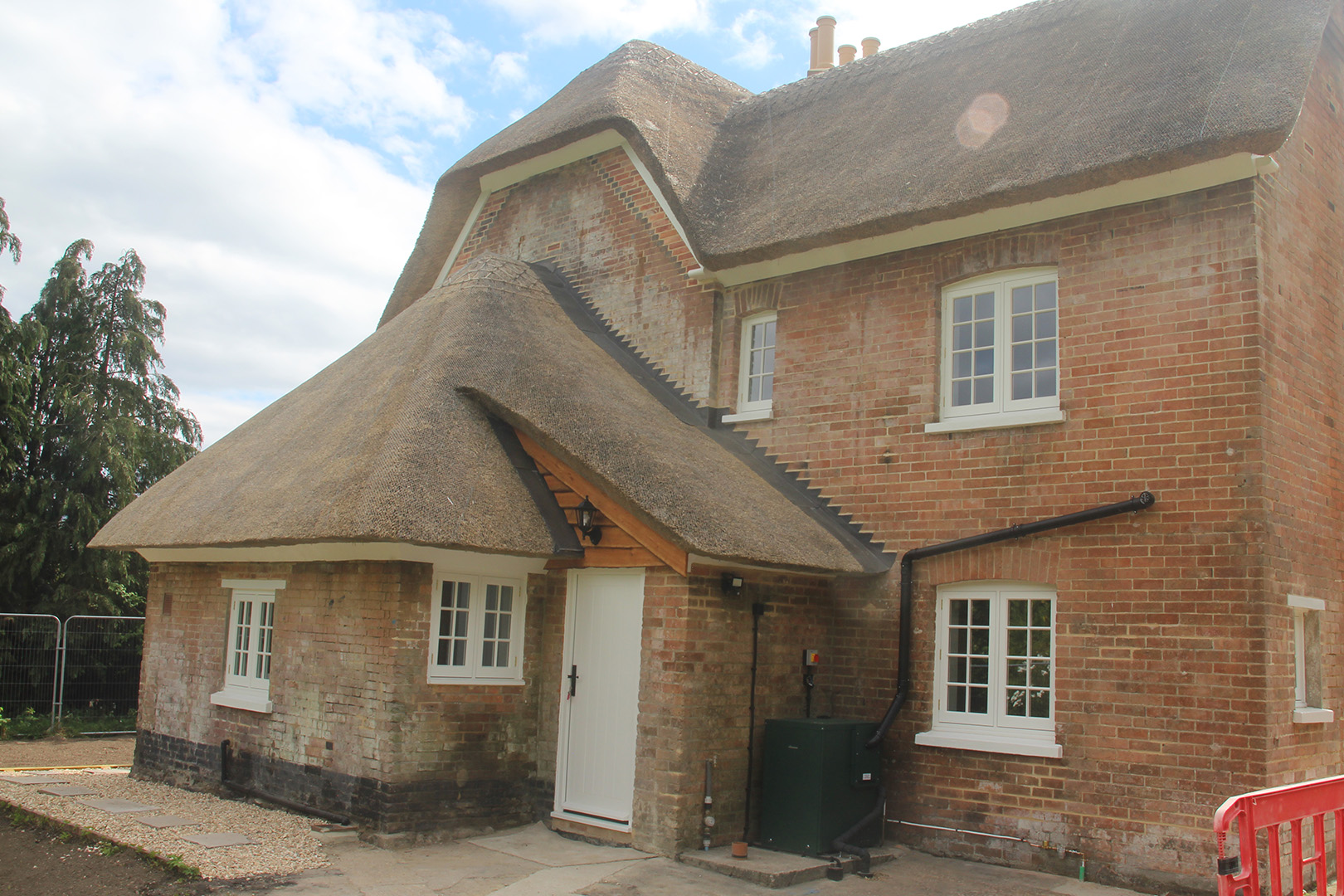
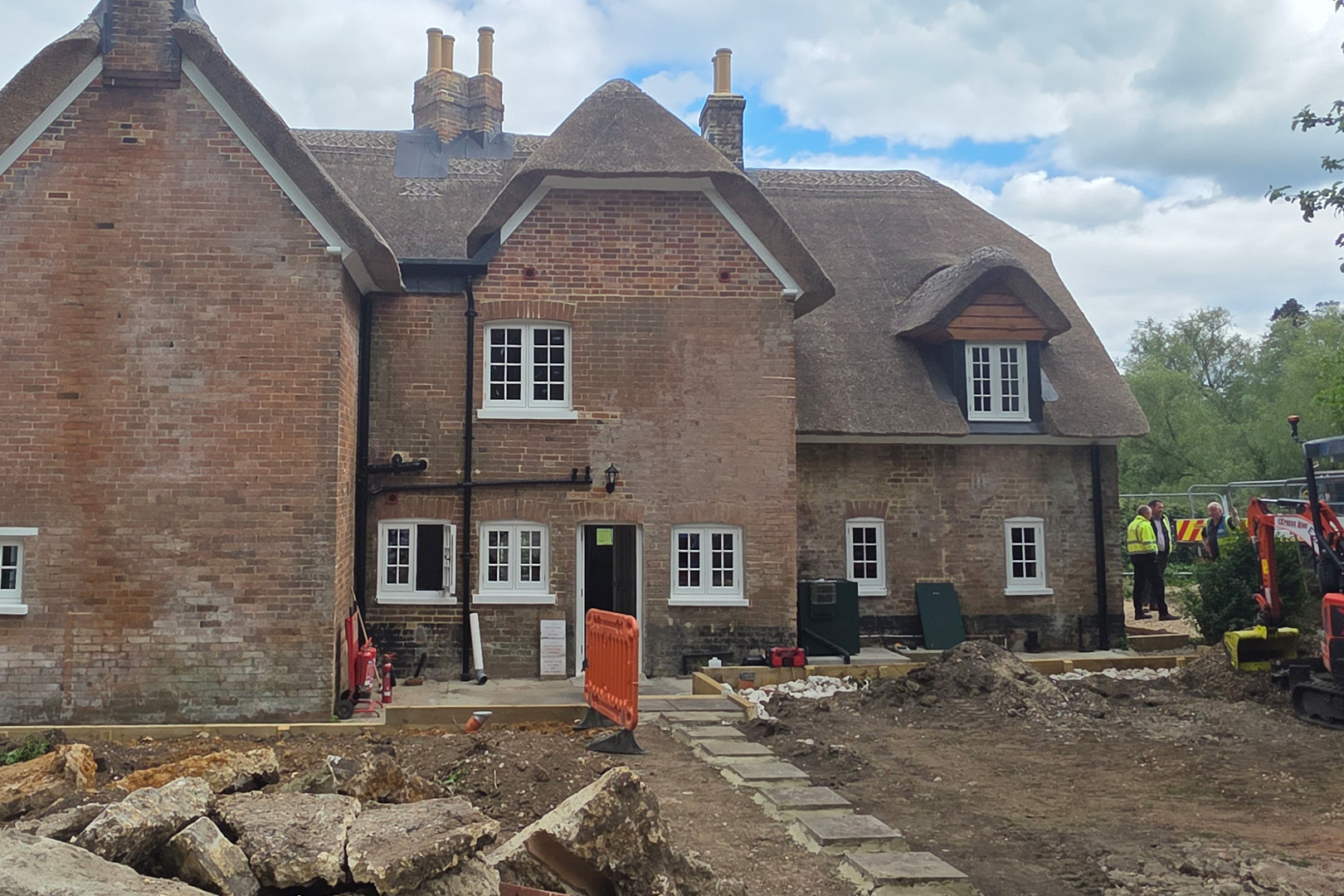
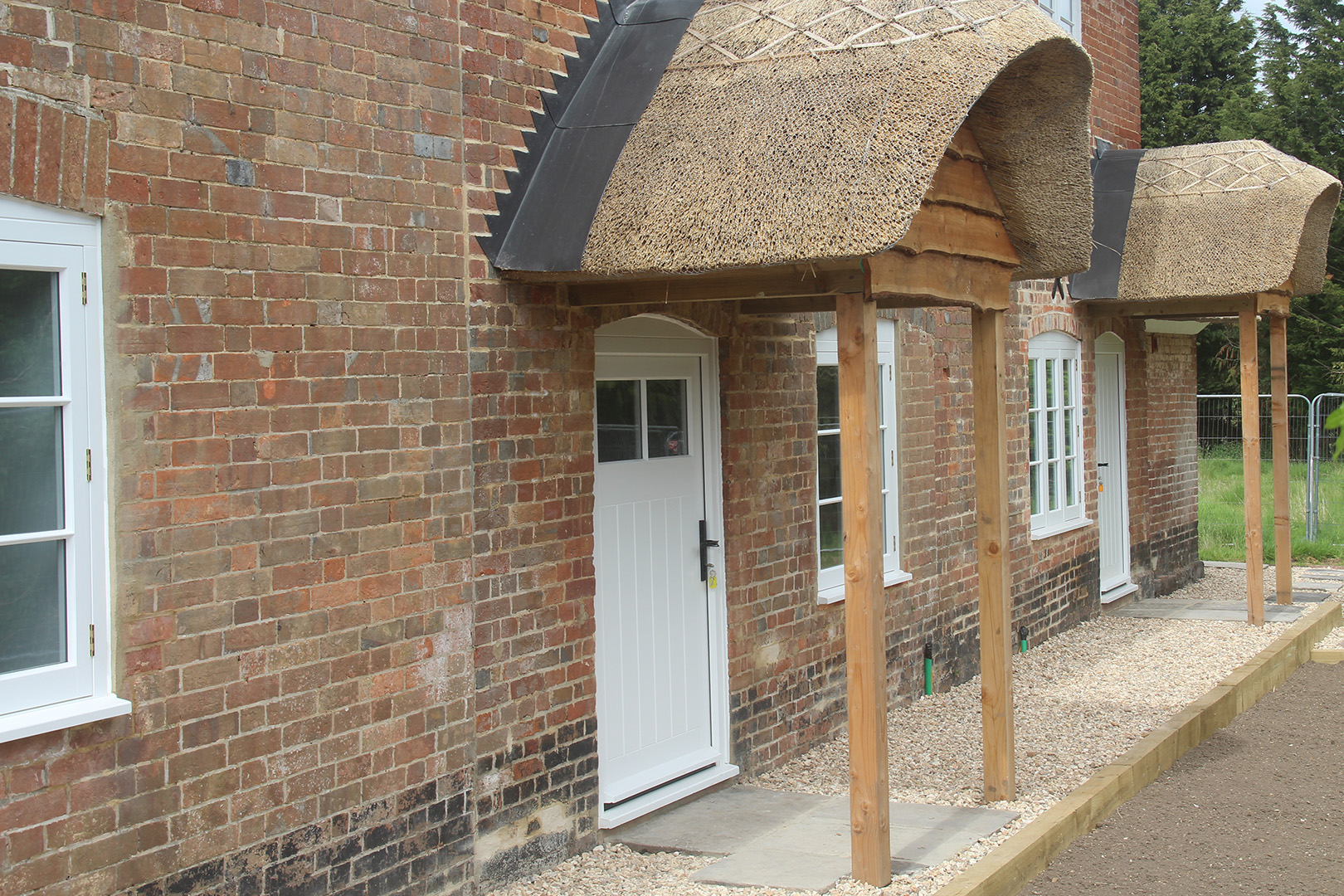
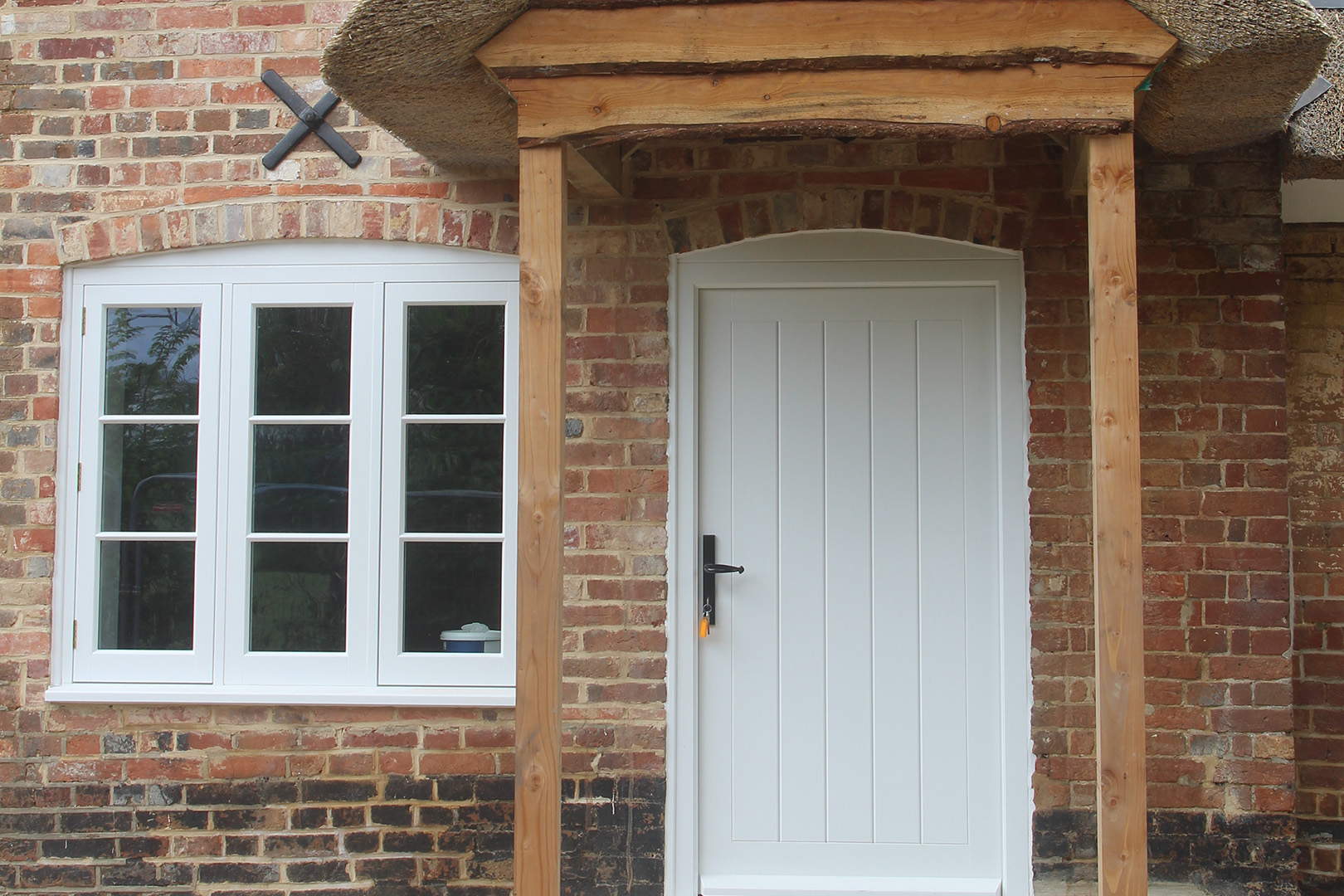
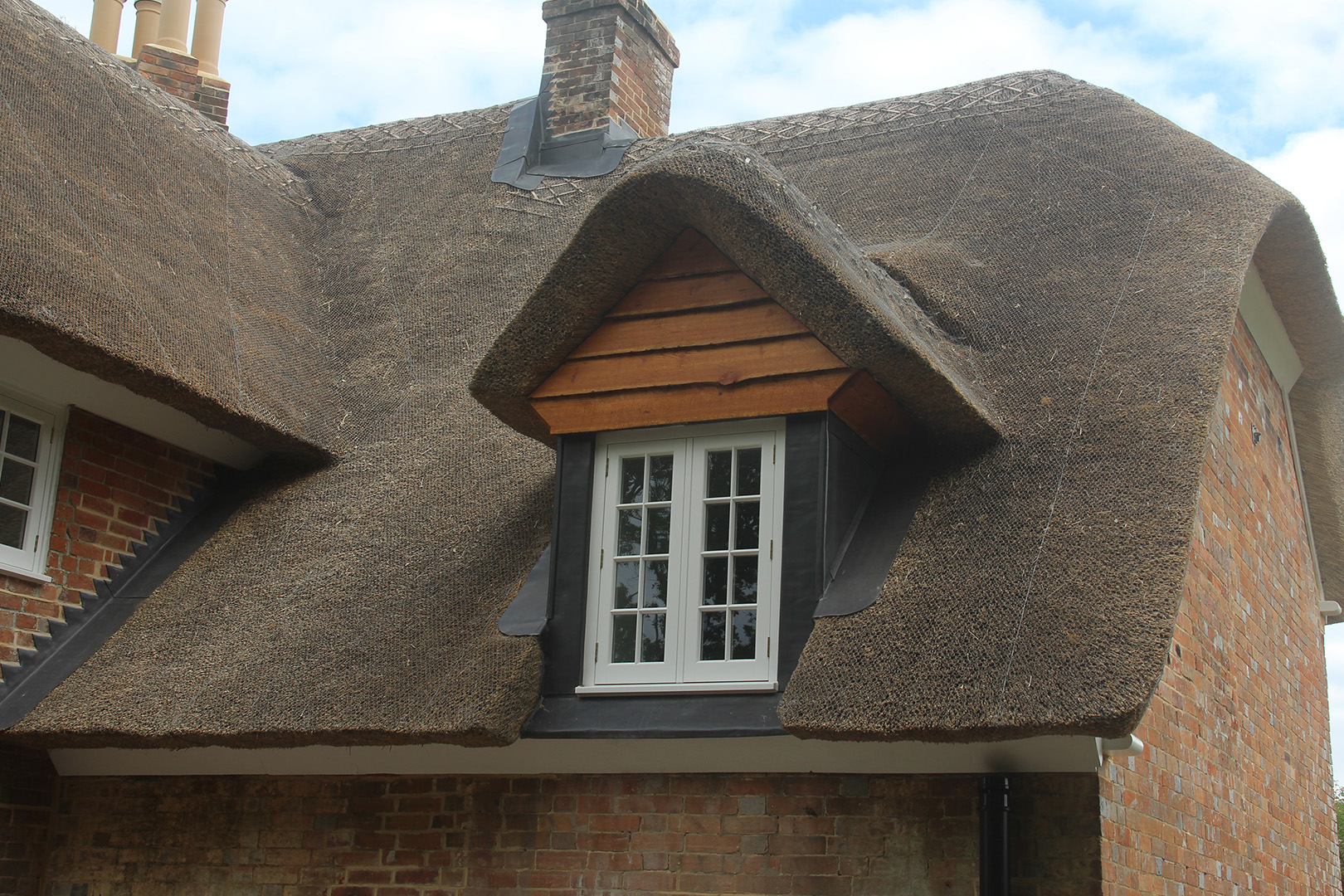
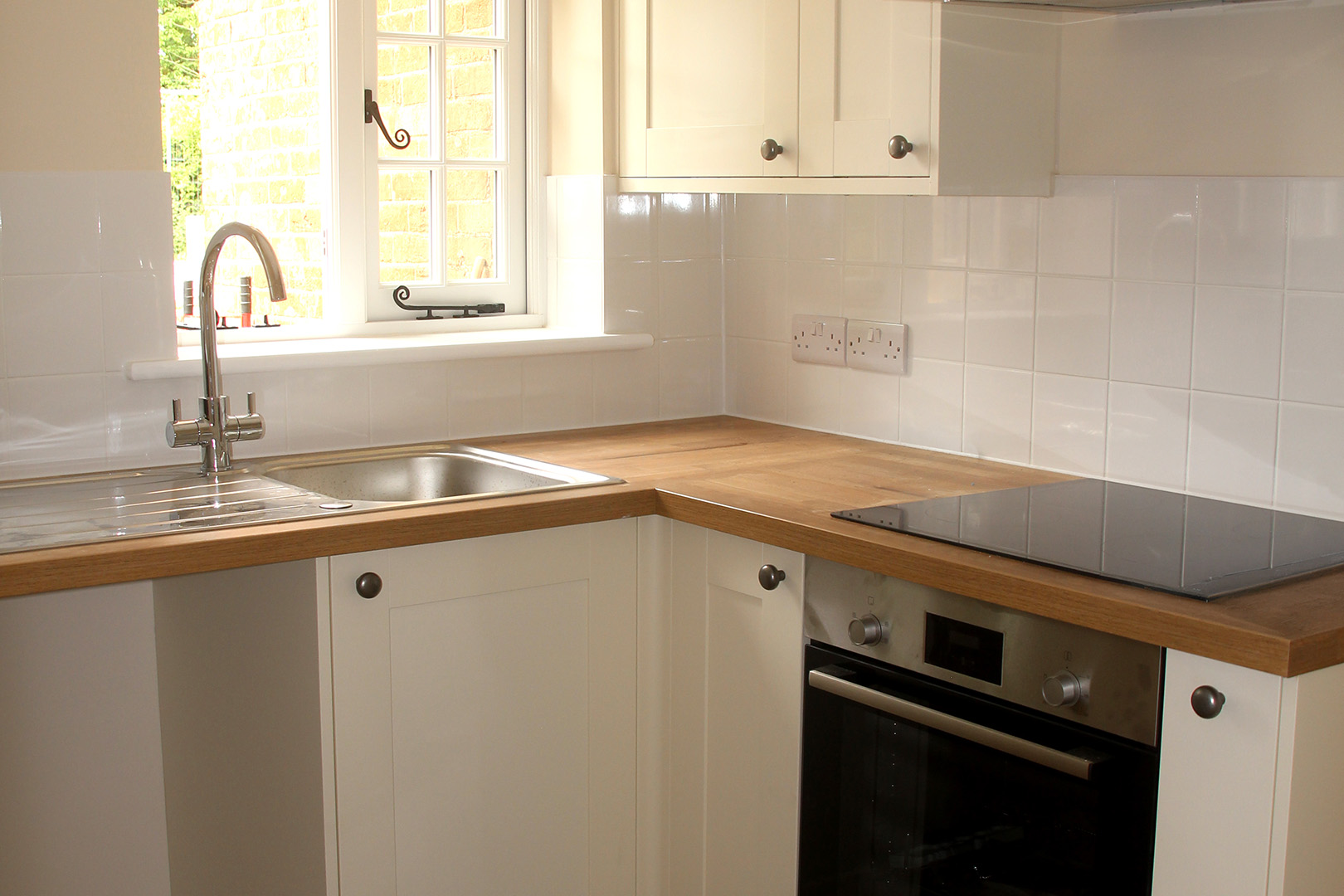
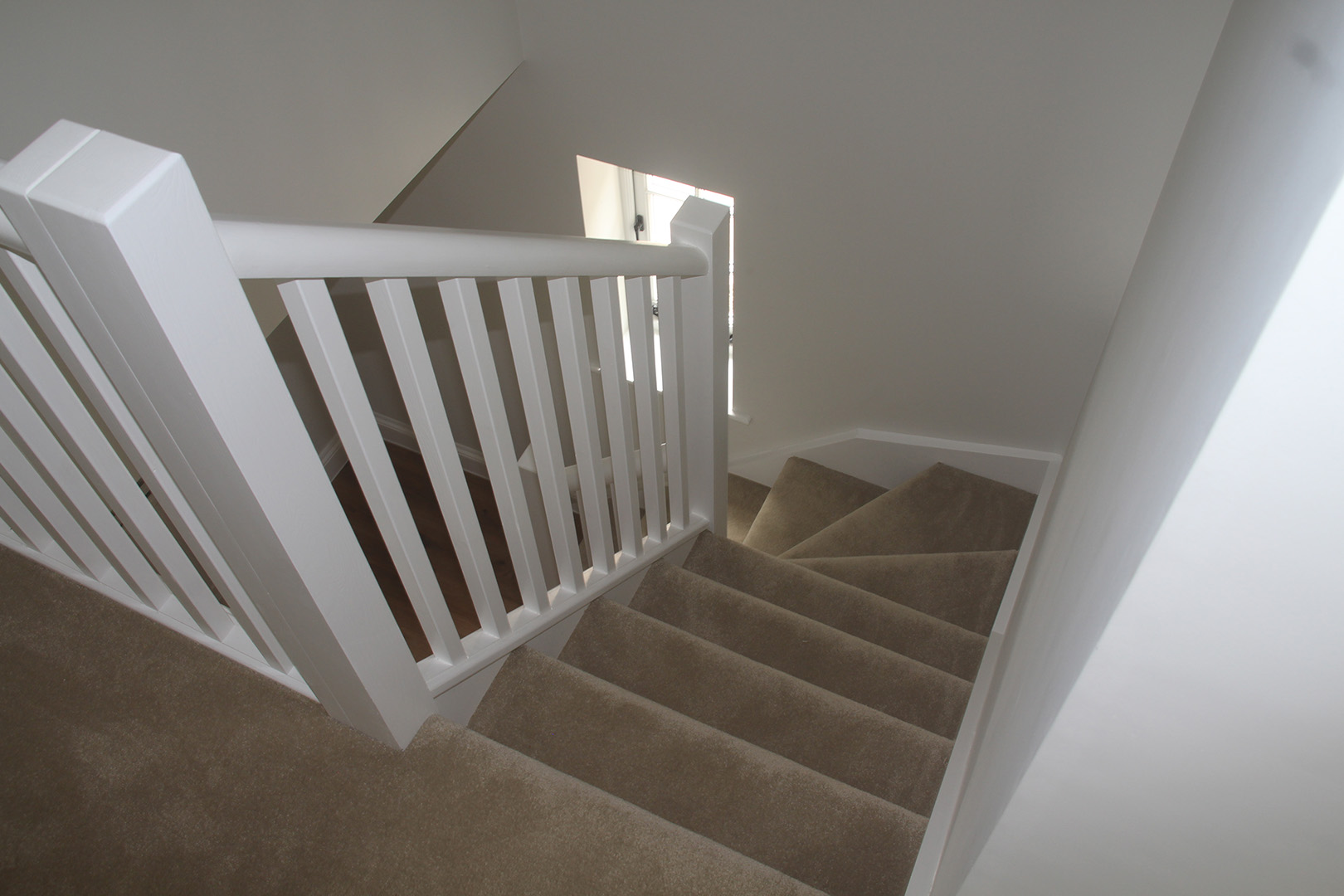
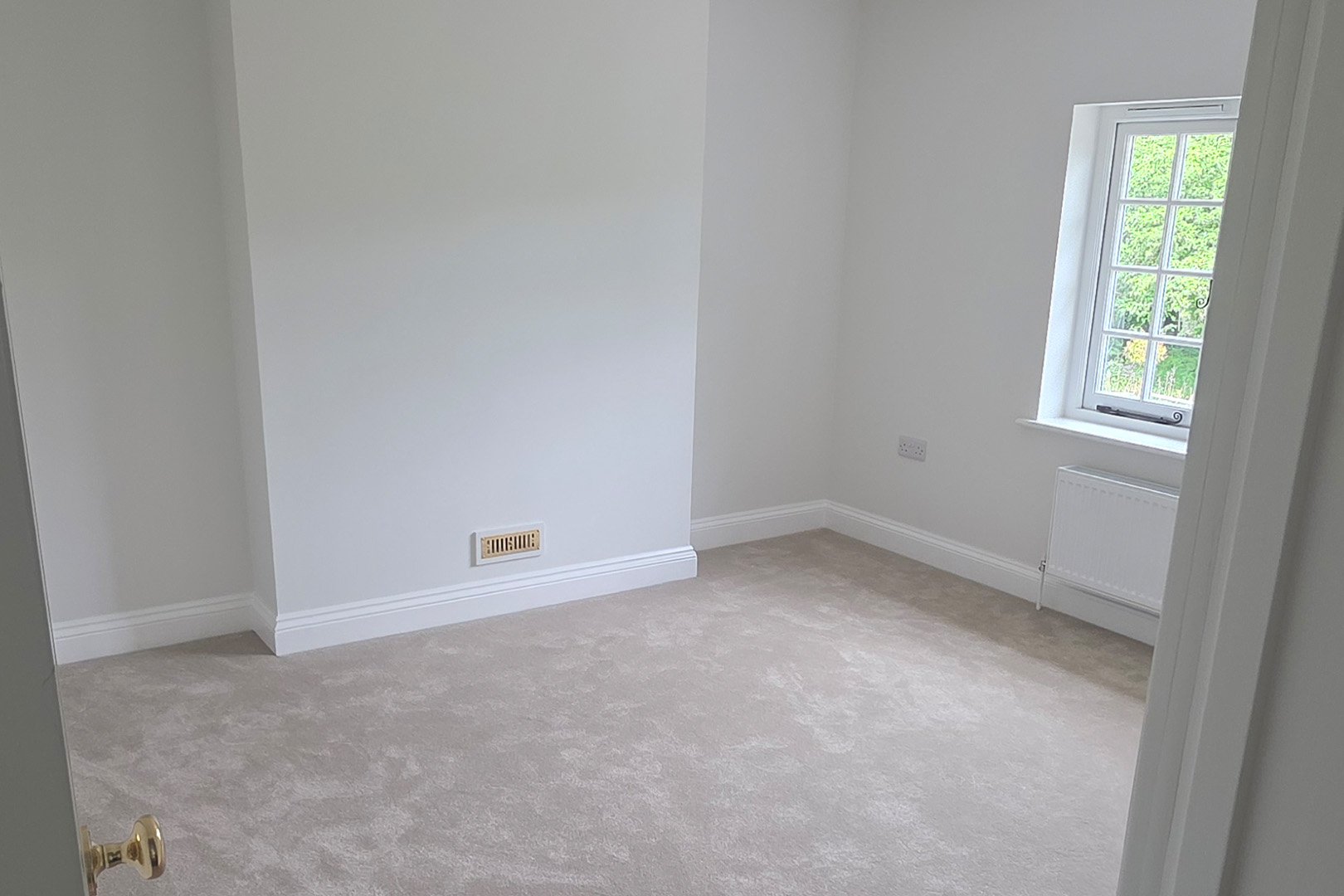
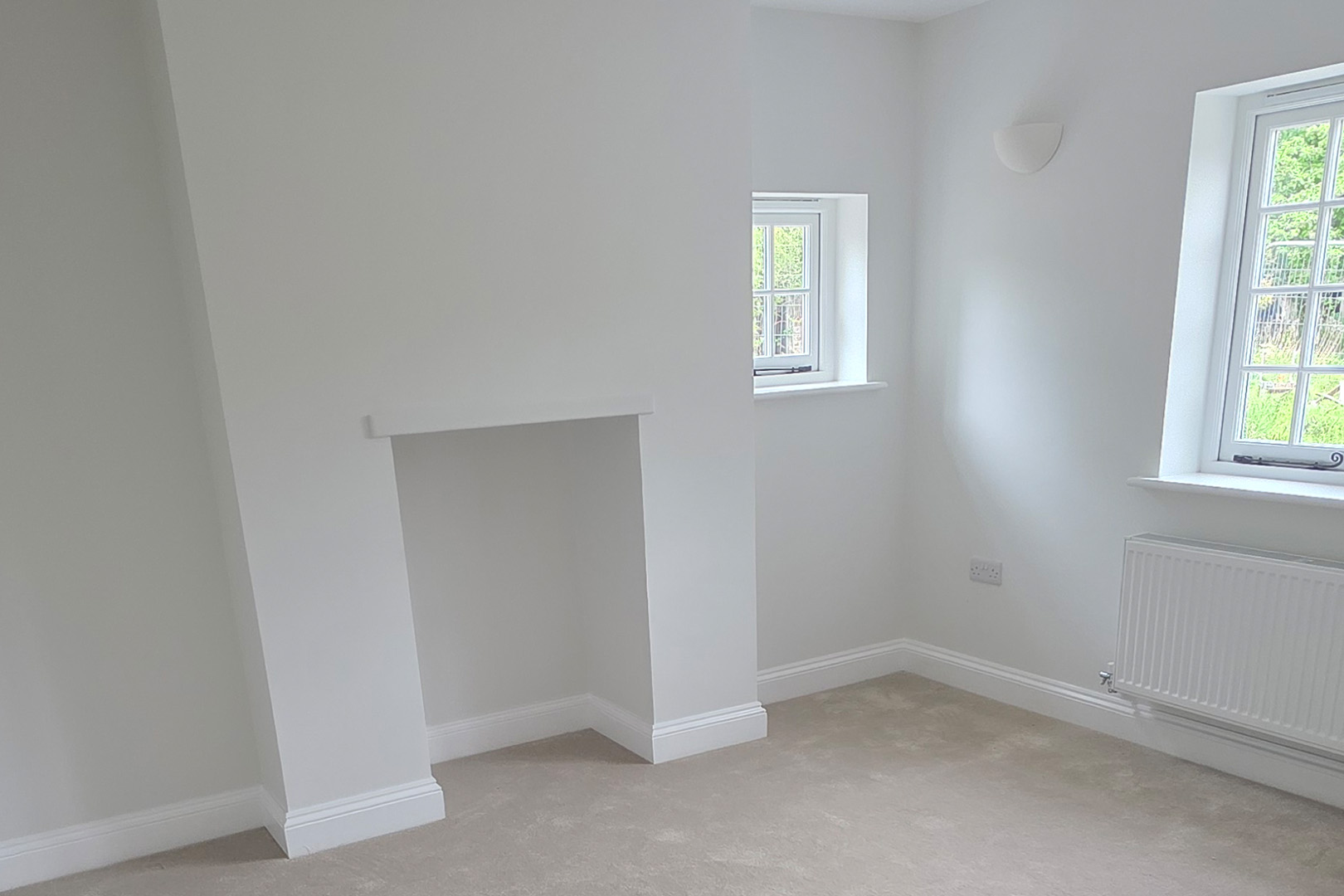
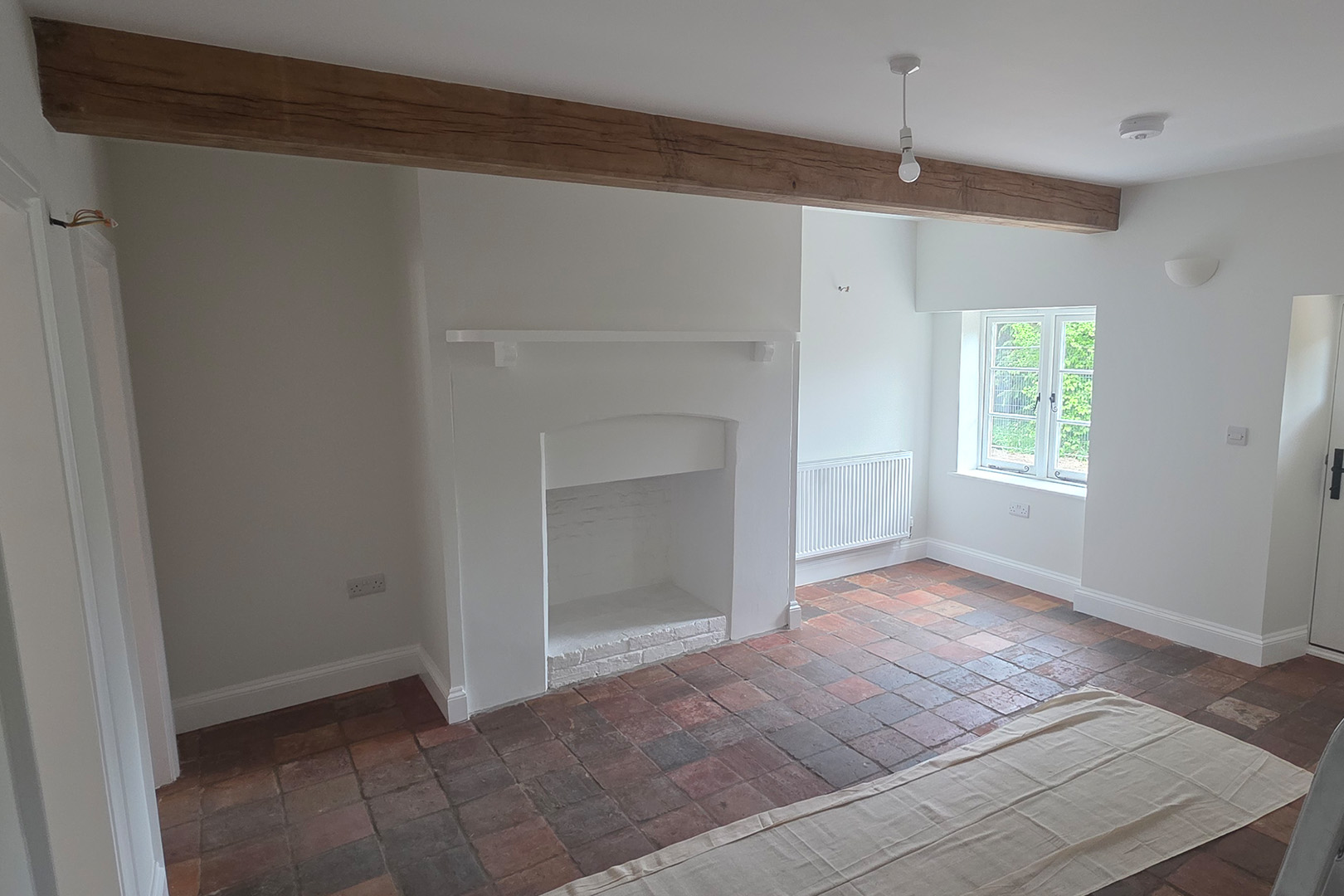
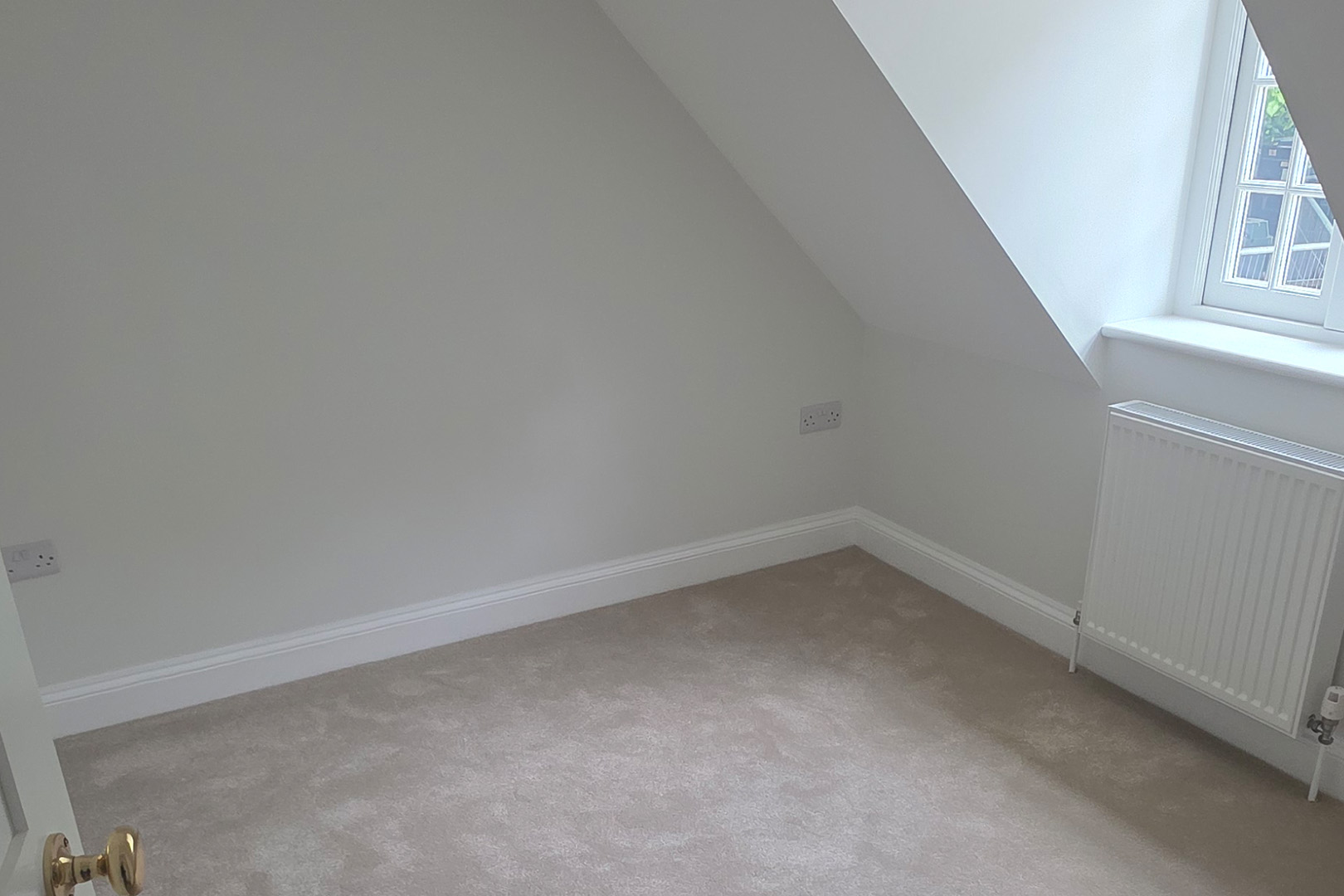
The reconstruction of Dairy Cottages, Wimborne has been an interesting project and the buildings have now been sympathetically restored.
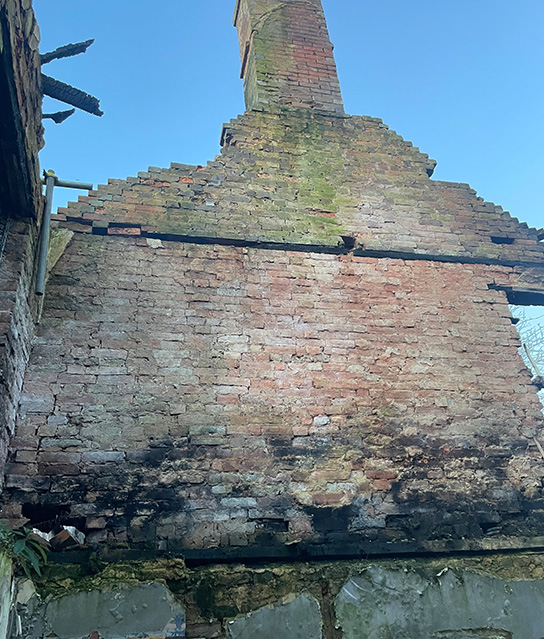
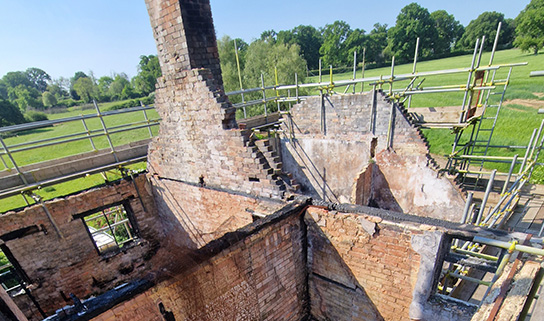
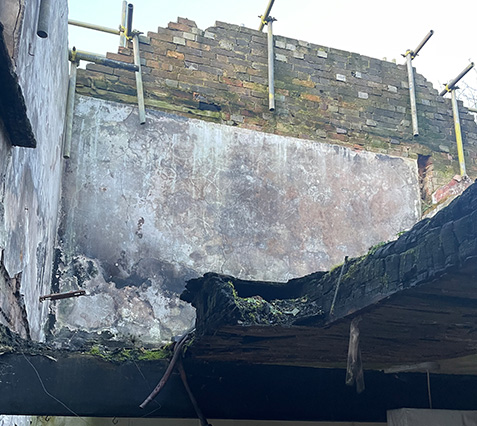
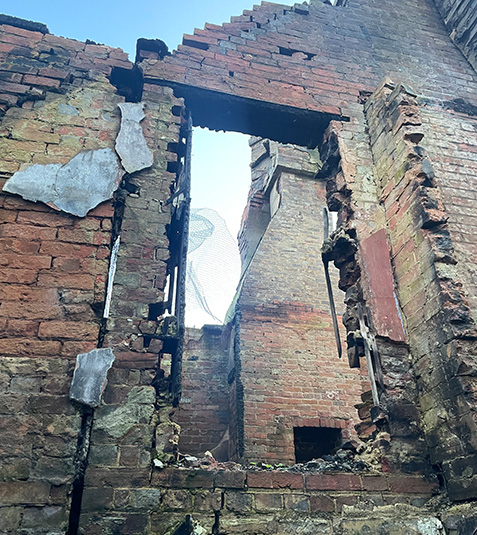
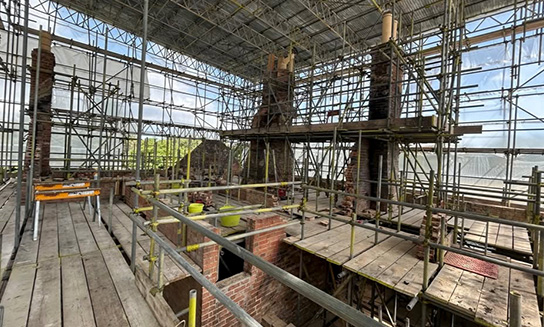
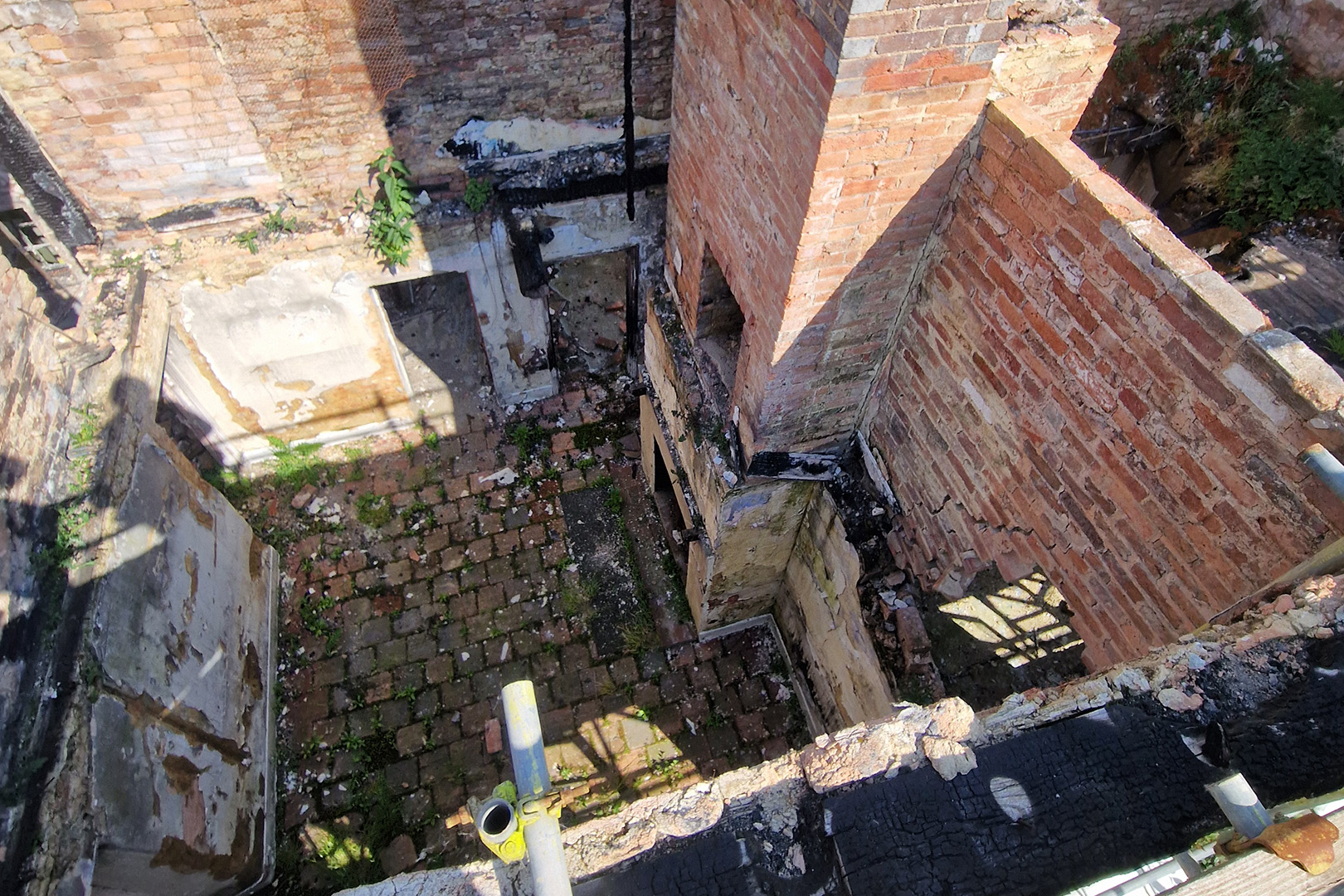
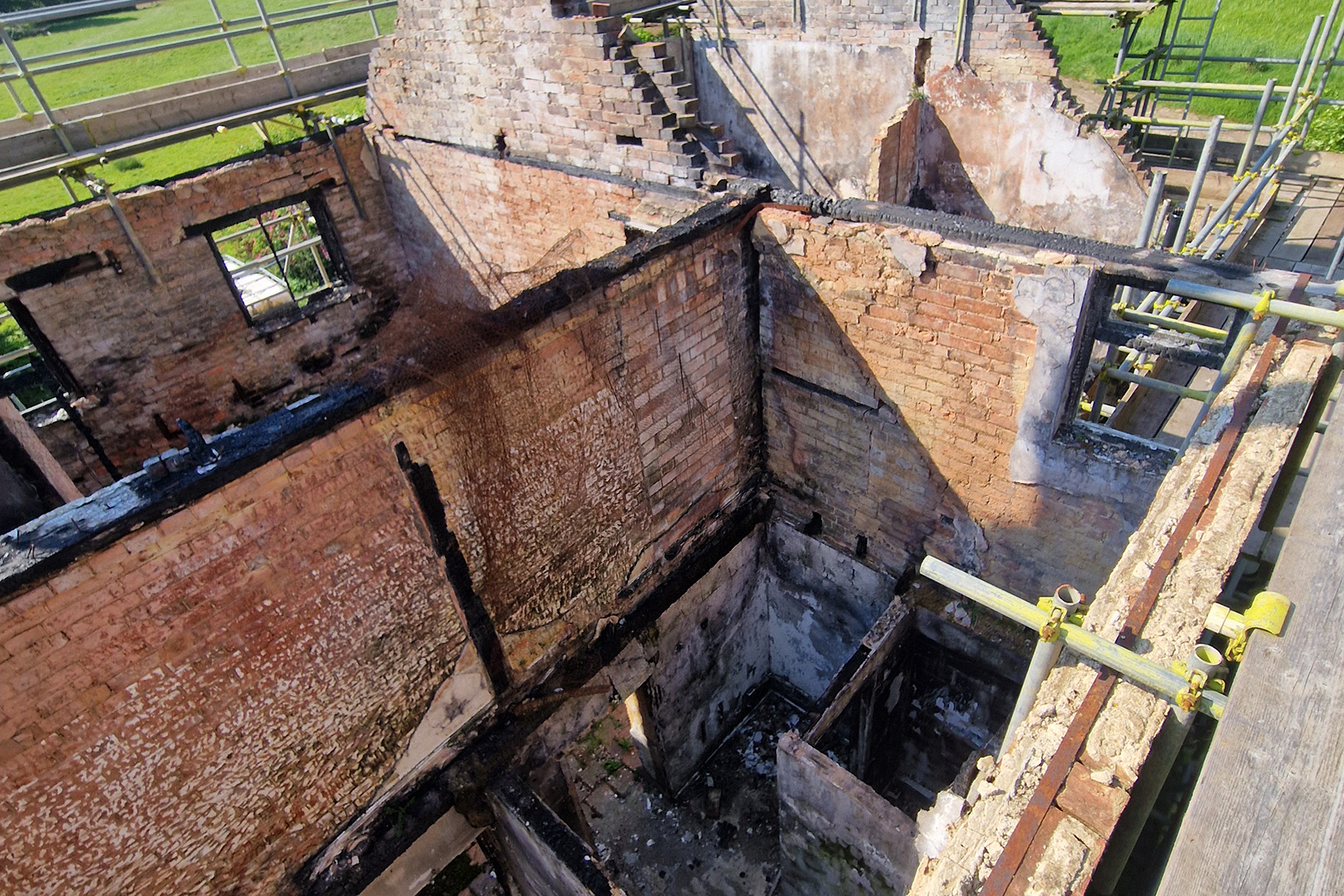
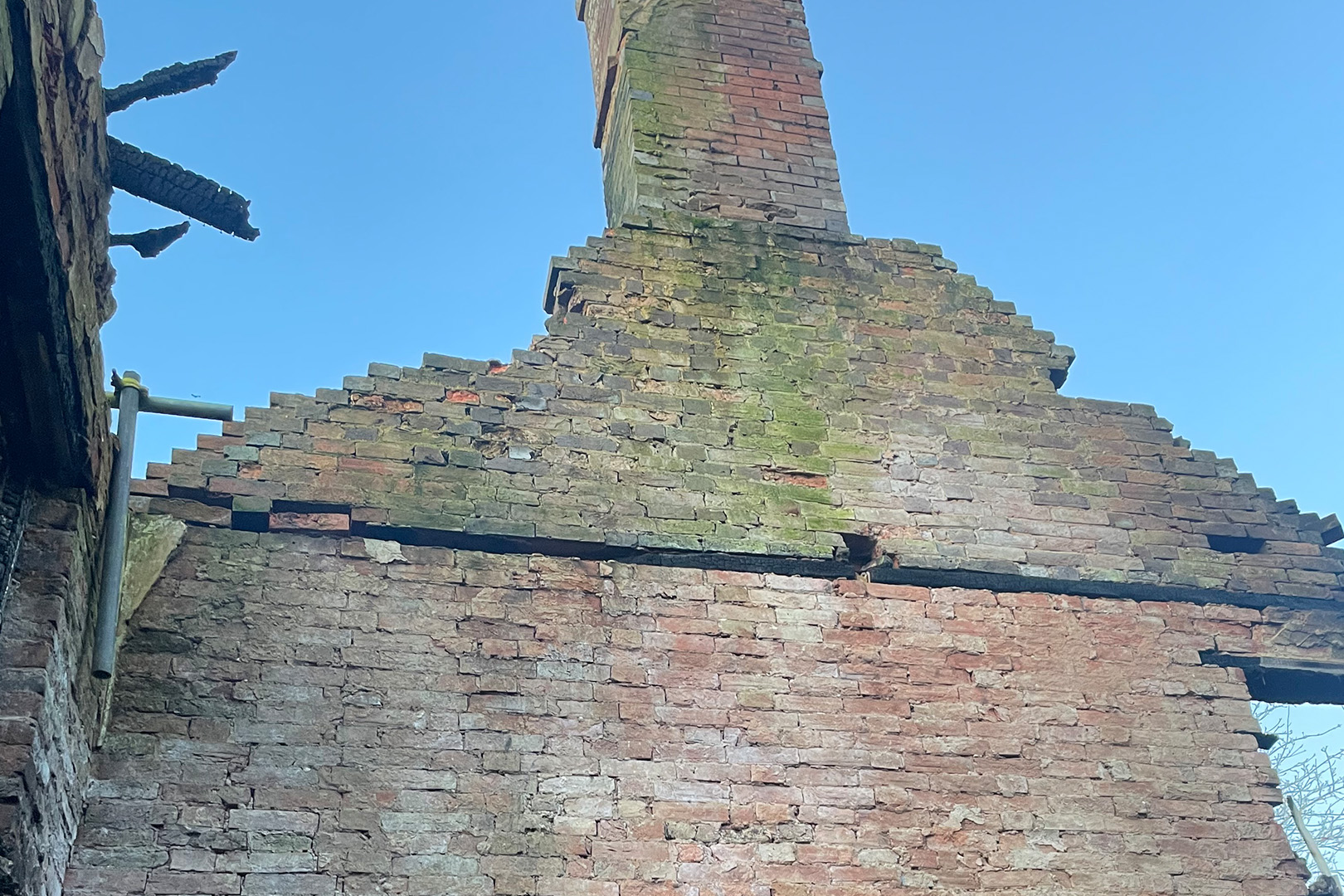
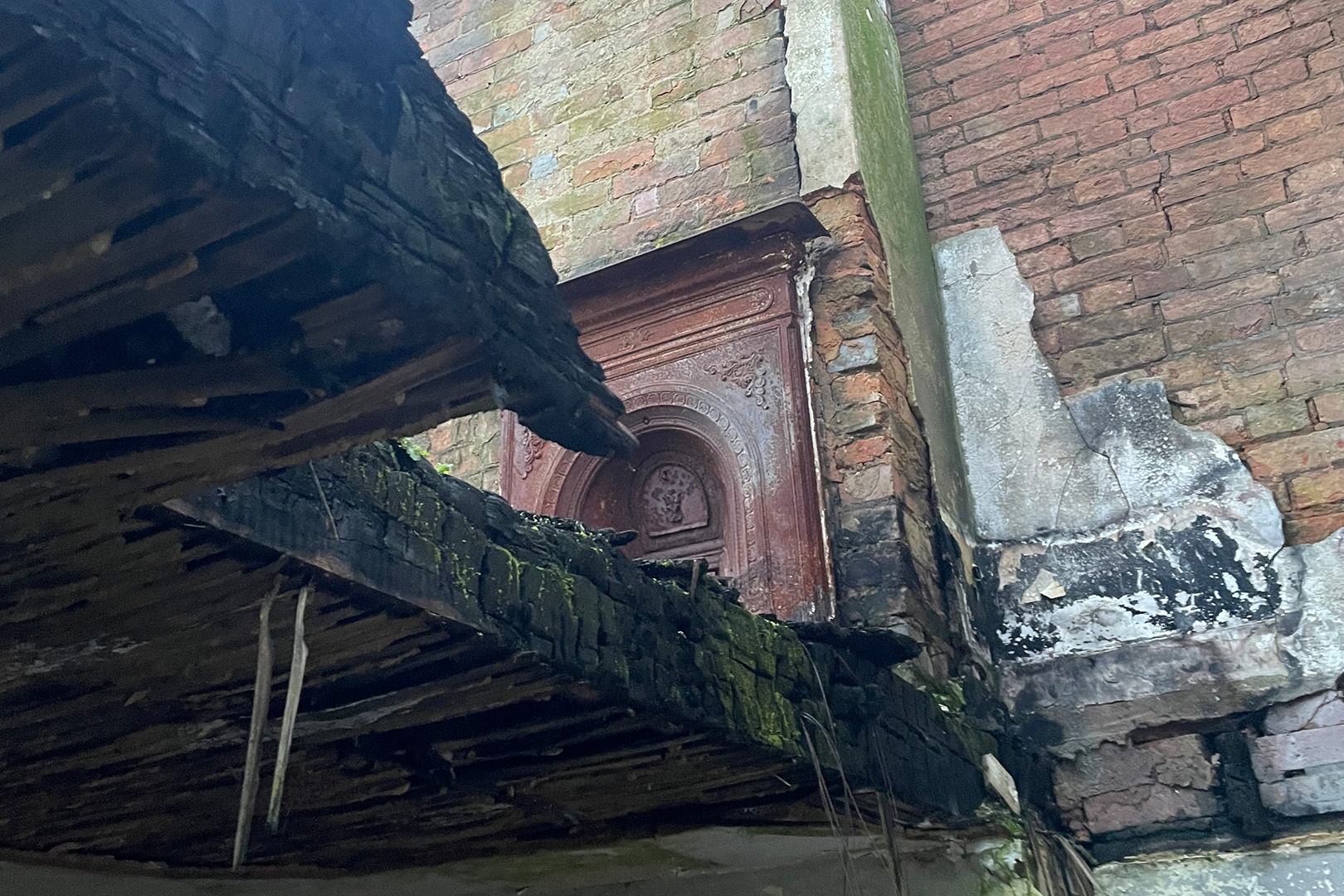
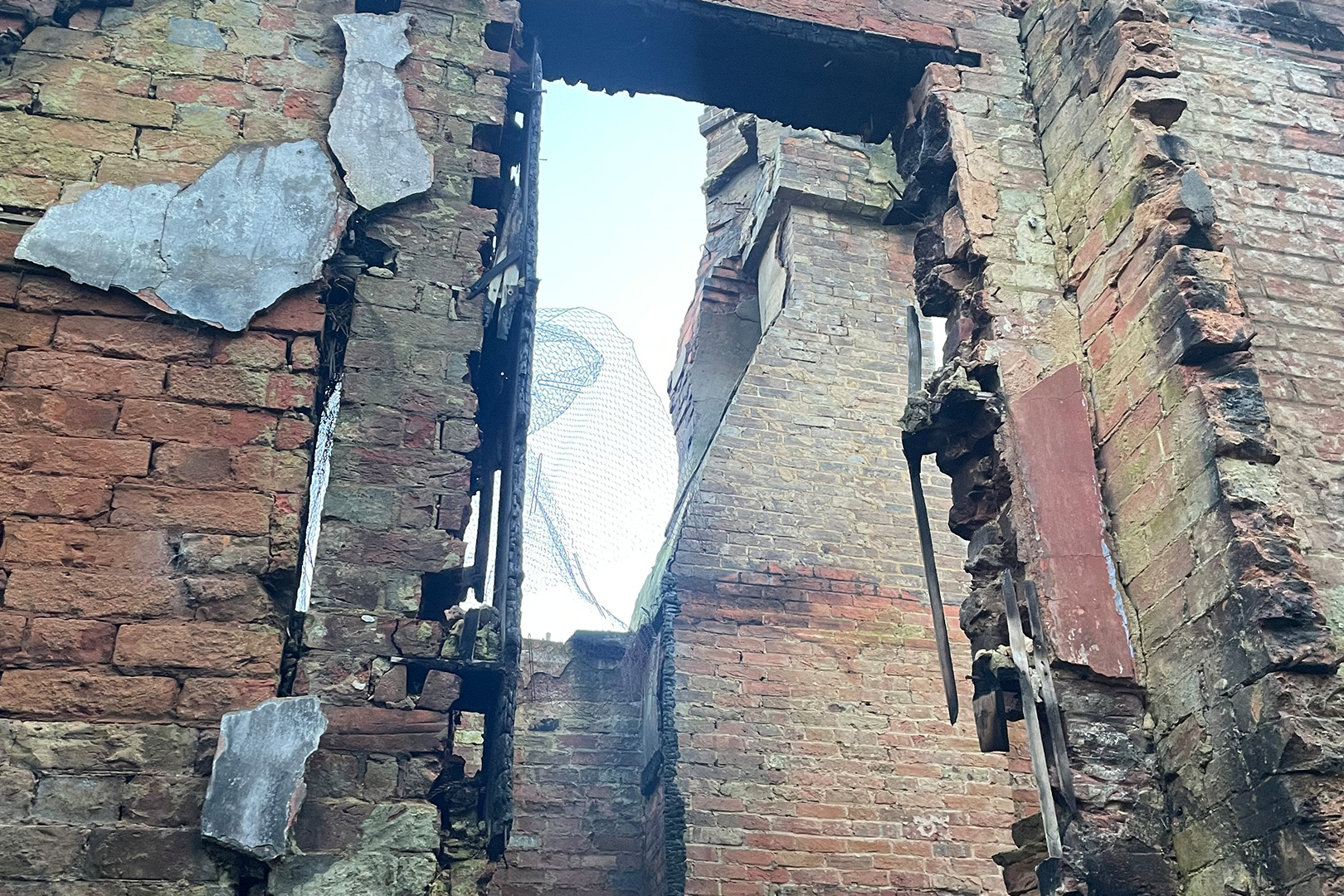
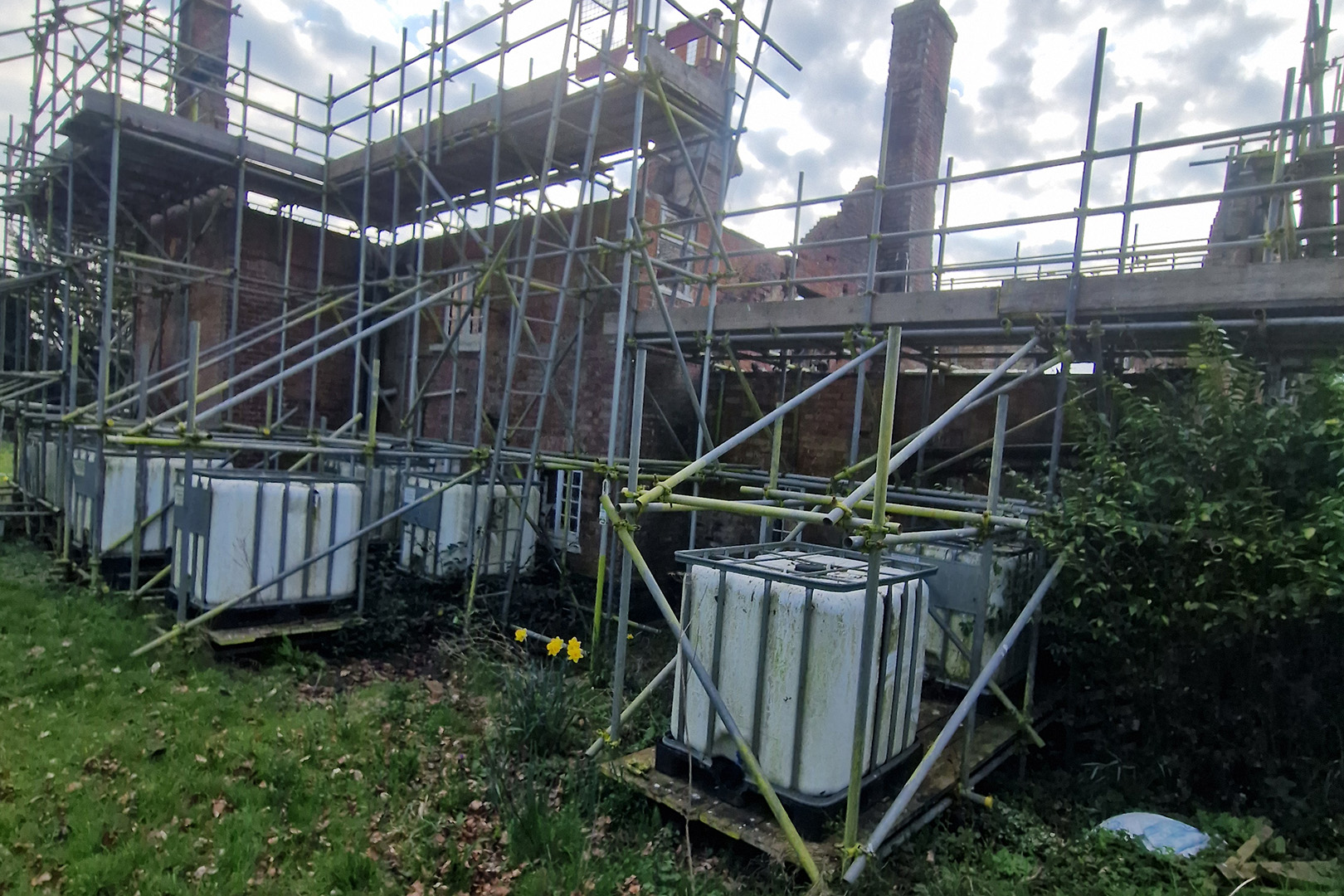
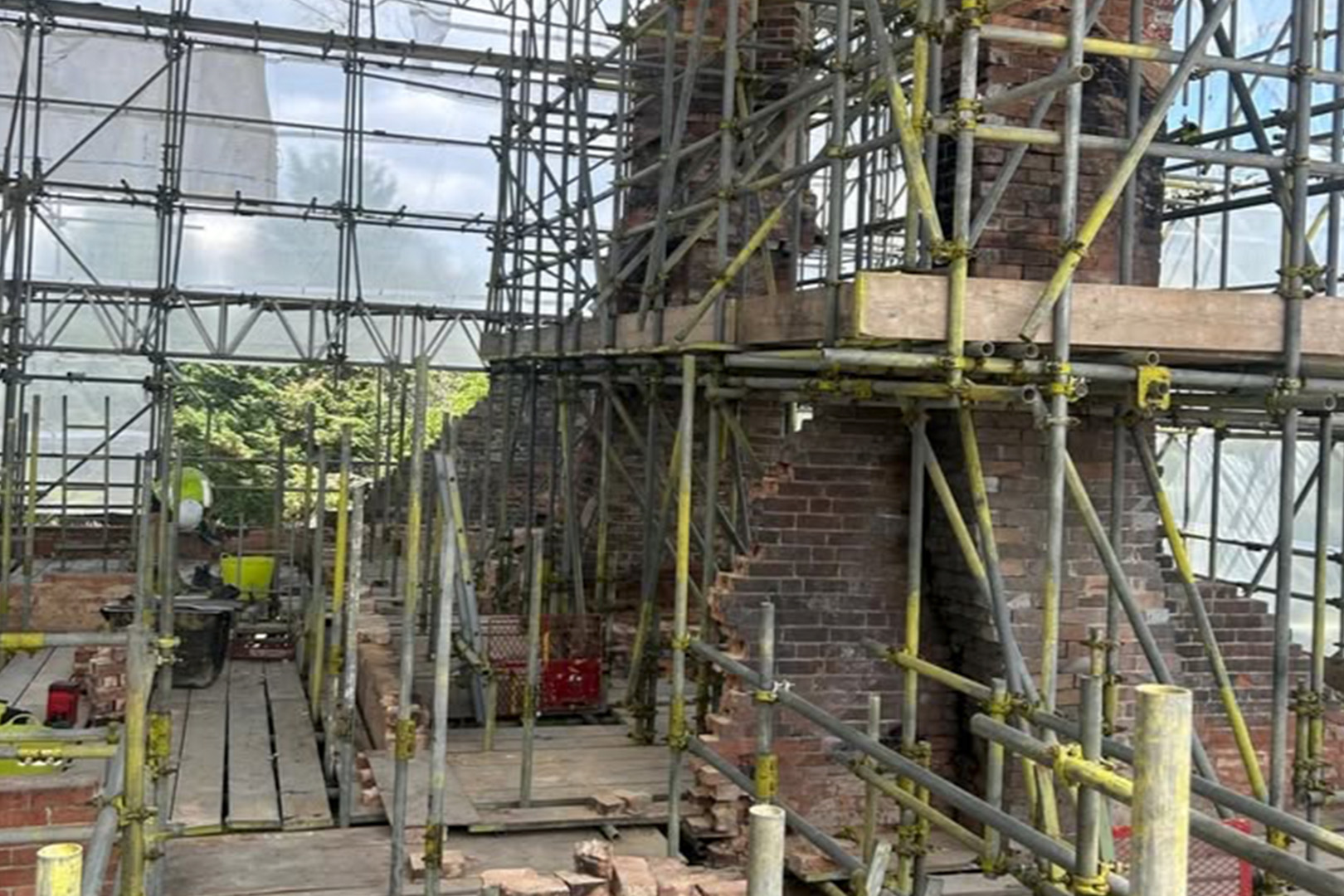
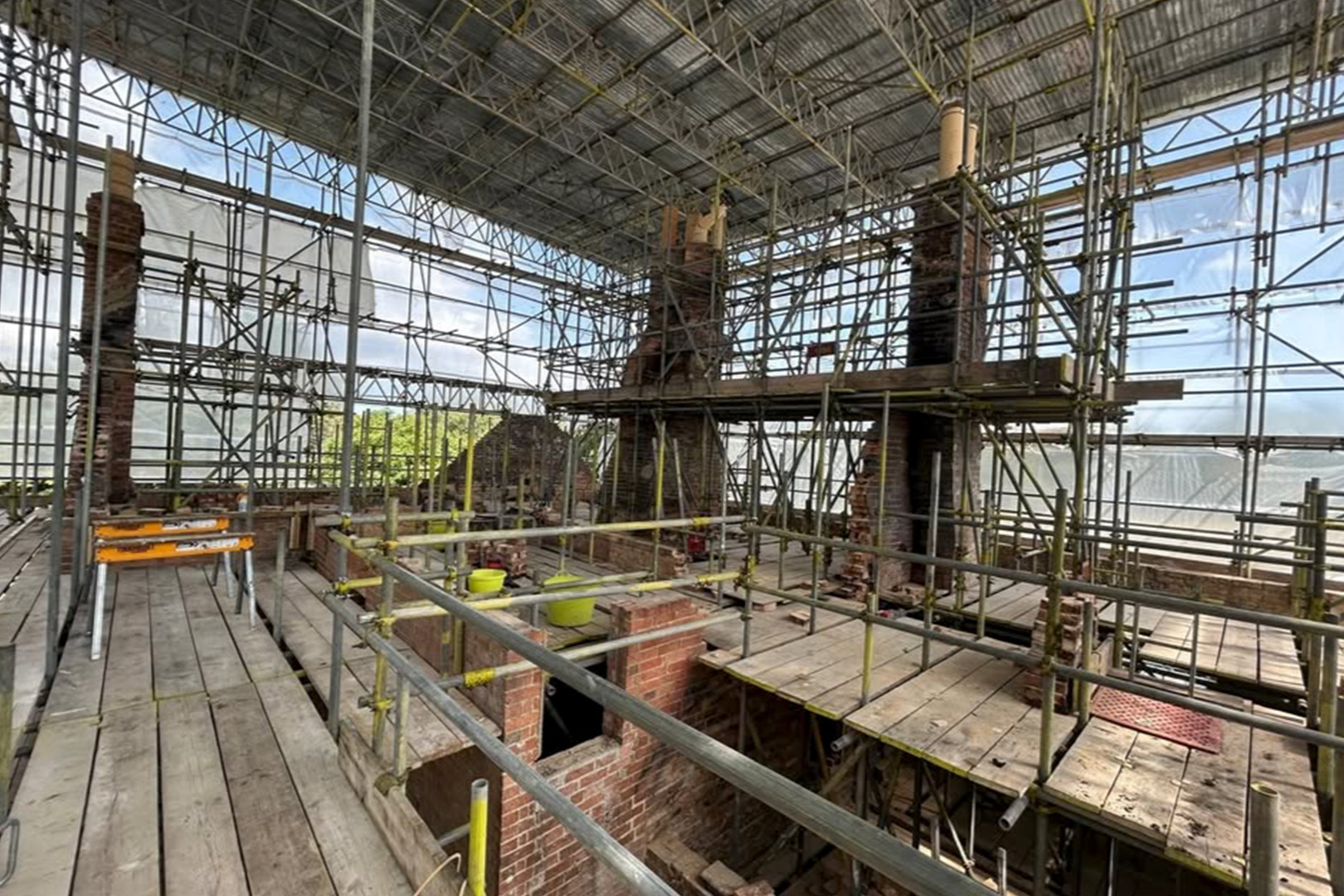
The challenging aspects of the project have been around the stabilising of the original structure following the fire. Once the fire had stripped out much of the original timber structure the remaining masonry became unstable. A temporary support scheme had to be implemented prior to the restoration of the cottages.
THE HISTORY
On the earliest map of 1847 it shows that Dairy Cottages was a single dwelling which had a non-domestic element attached to the east end of the rear elevation. At this time, the property was known as Dairy House, garden, and cottages.
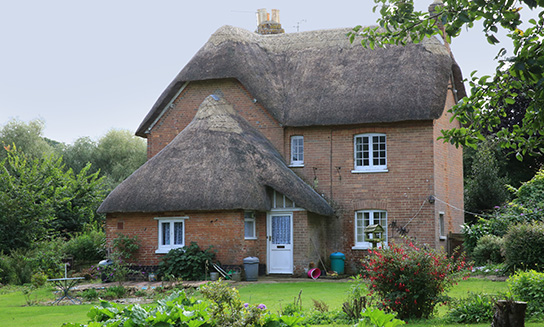
East and West Dairy Cottages, High Hall, Wimborne (now called Dairy Cottages) are now a semi-detached pair of brick and thatch cottages, formerly a row of three cottages which occurred between 1888 to 1901. The western and central cottages have been combined to form one property, and the cottages are listed Grade II.
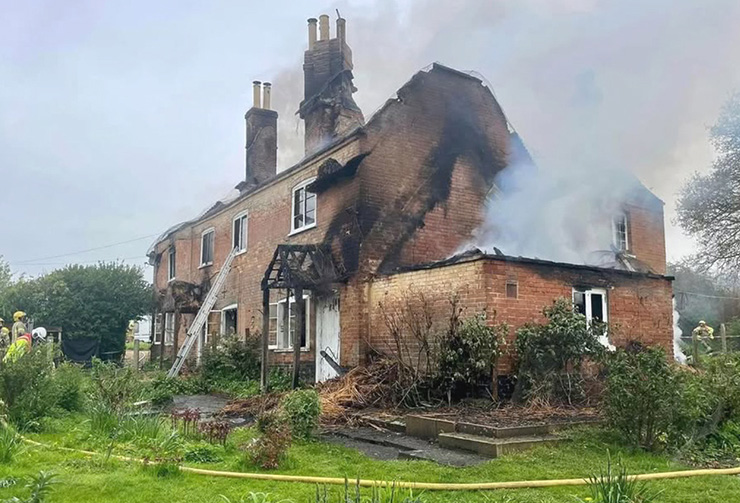
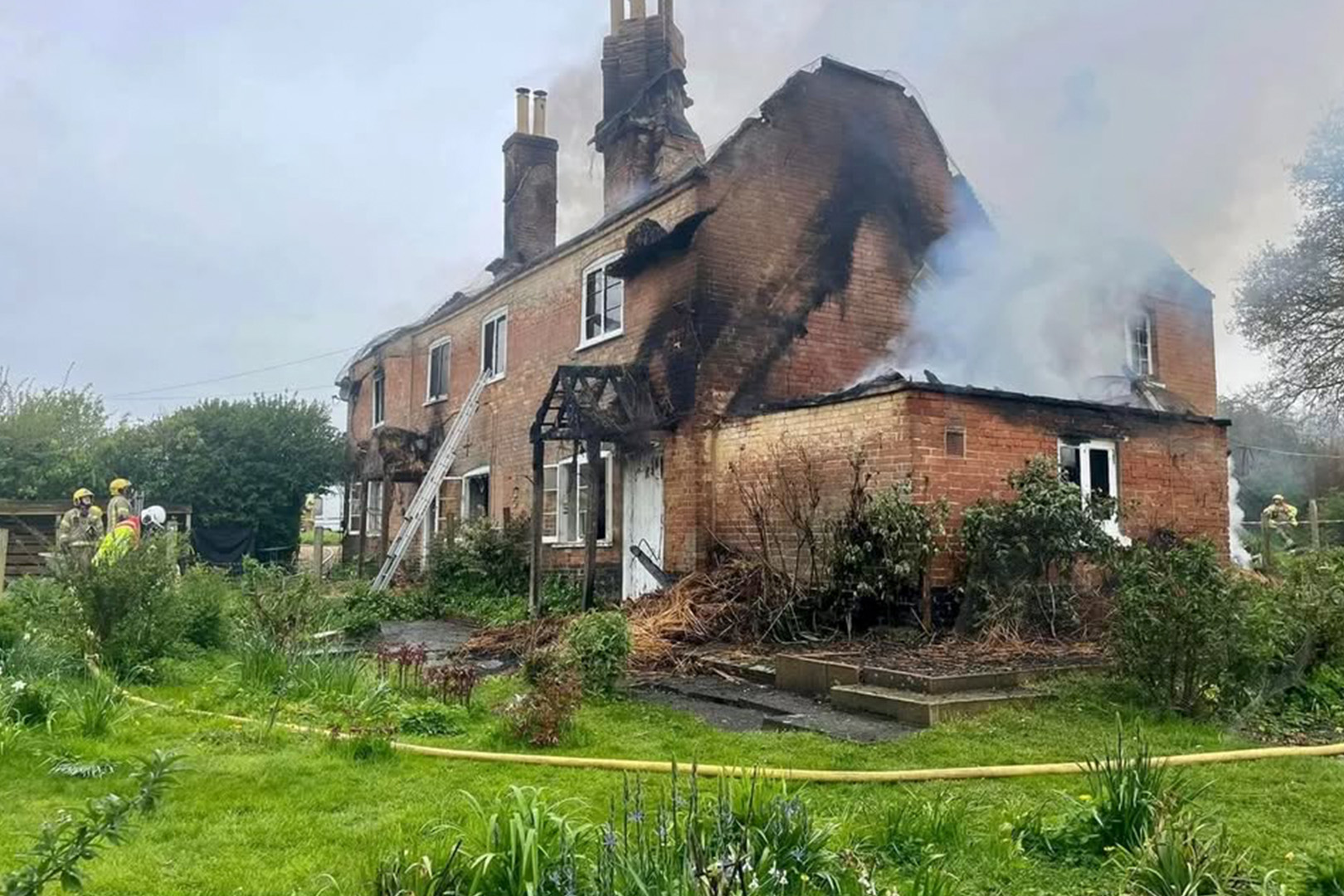
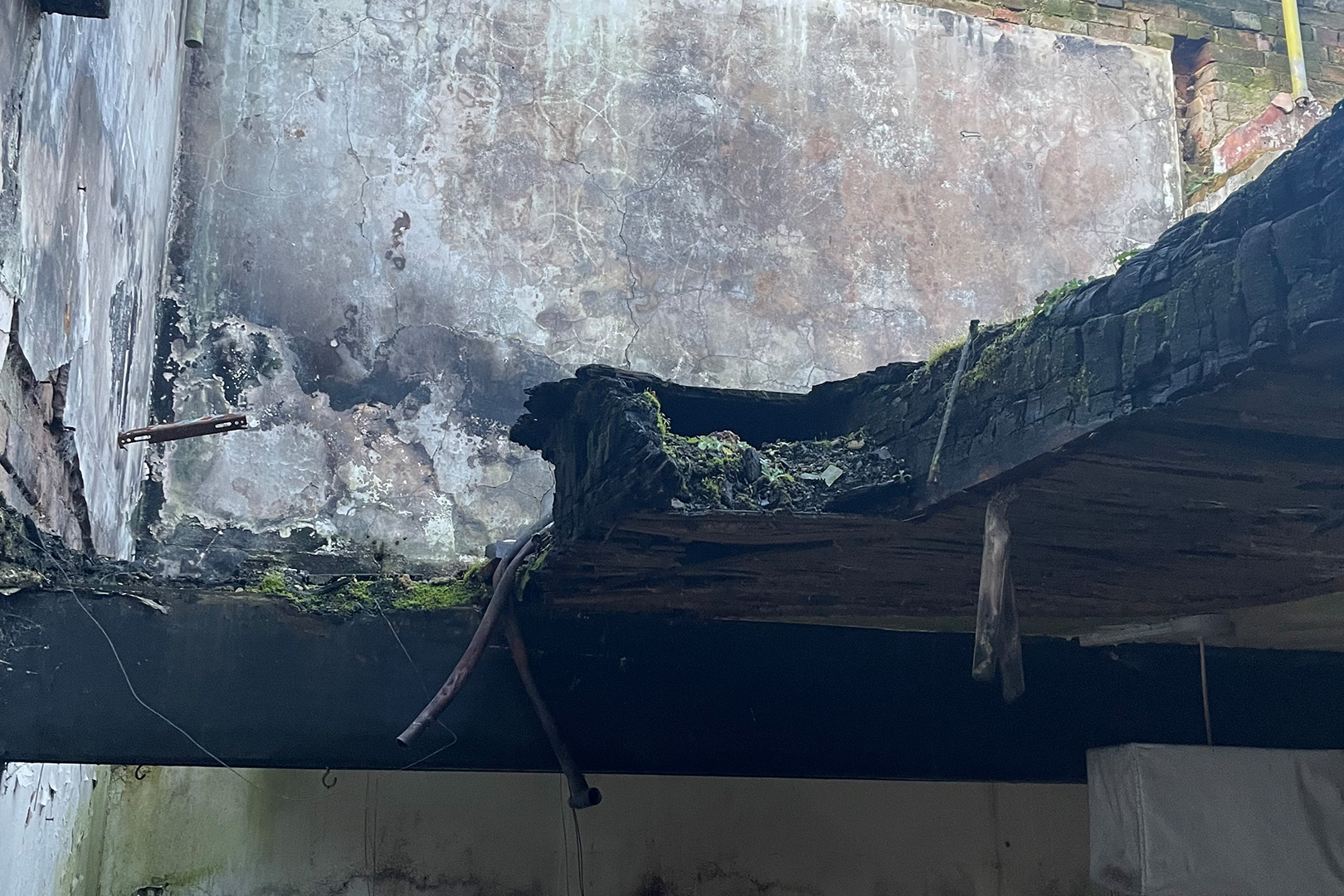
A significant fire occurred around breakfast time on Thursday 27th April 2023. And although the fire brigade responded promptly the fire burnt for some time and there was significant fabric loss through the thatch and across the properties. The thatch and roof structure were completely destroyed with considerable damage to the remaining fabric of the building including masonry walls.
Following the fire scaffold was erected to enable stabilisation of the remaining masonry walls whilst a repair strategy was fully developed and a suitable contractor appointed for the works.
THE RECONSTRUCTION
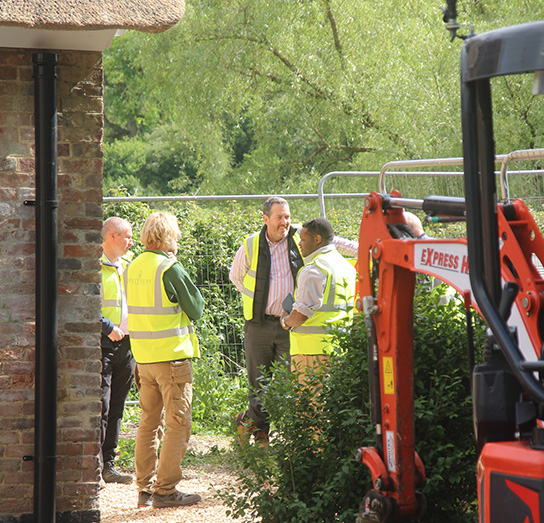
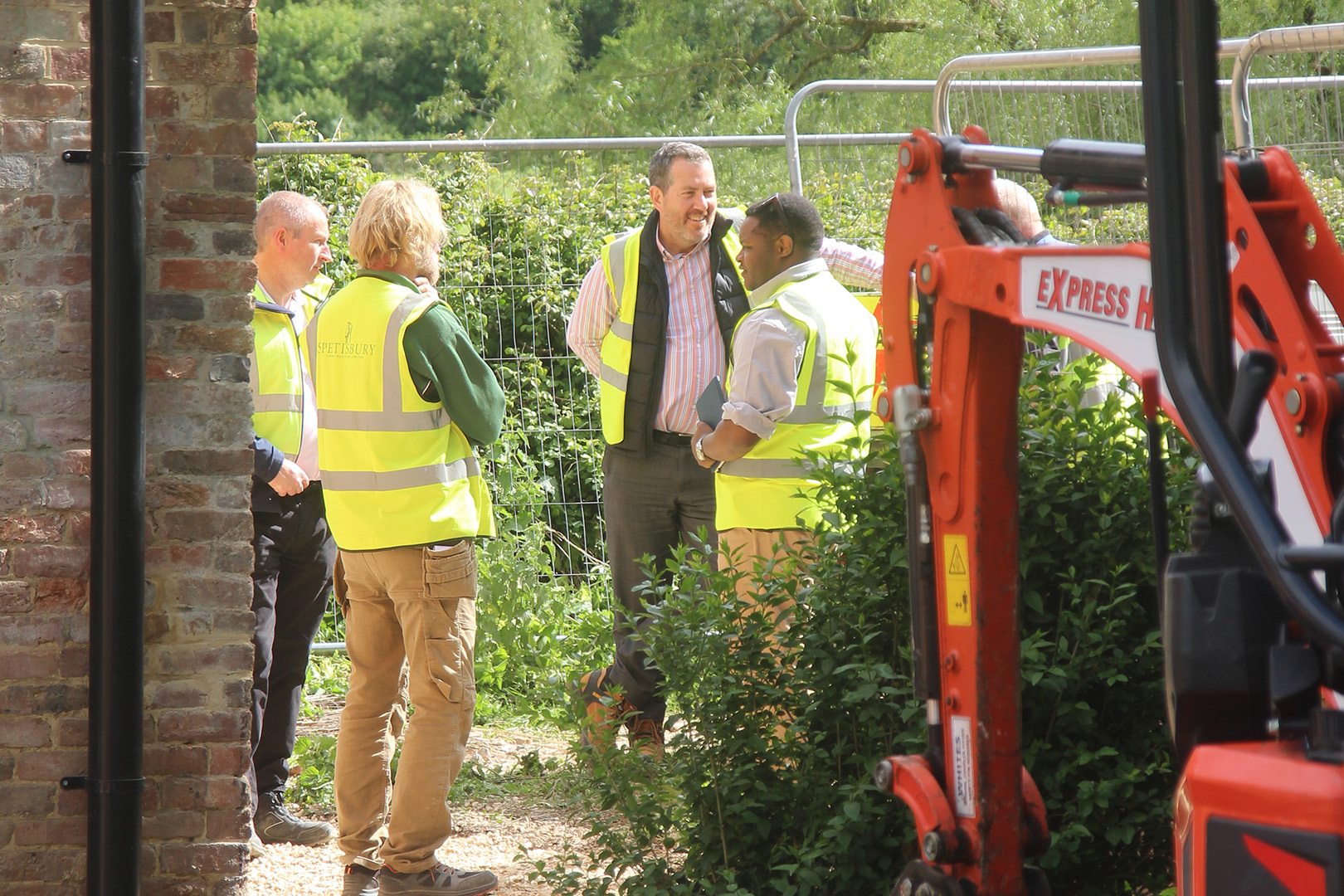
Upon appointment Spetisbury Construction Ltd conducted an initial soft strip of the fire damaged elements which had to be conducted in a systematic way and in line with a detailed temporary works strategy to ensure that the stability of the remaining structure was not compromised.
Elements of the remaining structure were removed, materials salvaged and cleaned up to allow them to be reused in the structural rebuild. Extensive rebuilding was carried out to the external walls, internal walls, and chimney stacks to ensure future stability.
Once stable the new timber first floor was constructed to provide further stability to the external walls which were still restraint by designed scaffold. This then allowed some of the scaffold to be removed to enable other elements to be constructed.
This floor level was then temporary boarded to allow the cut roof structure to be constructed together with fire boarding to underside of thatch to comply with the Dorset Model and current regulations for thatched properties. A new thatched roof was provided by local craftsmen achieving a weather tight building which the building had not had for over two years. Once the building had a roof again this allowed the remaining temporary internal scaffold support to be removed, allowing other elements of the building to be progressed.
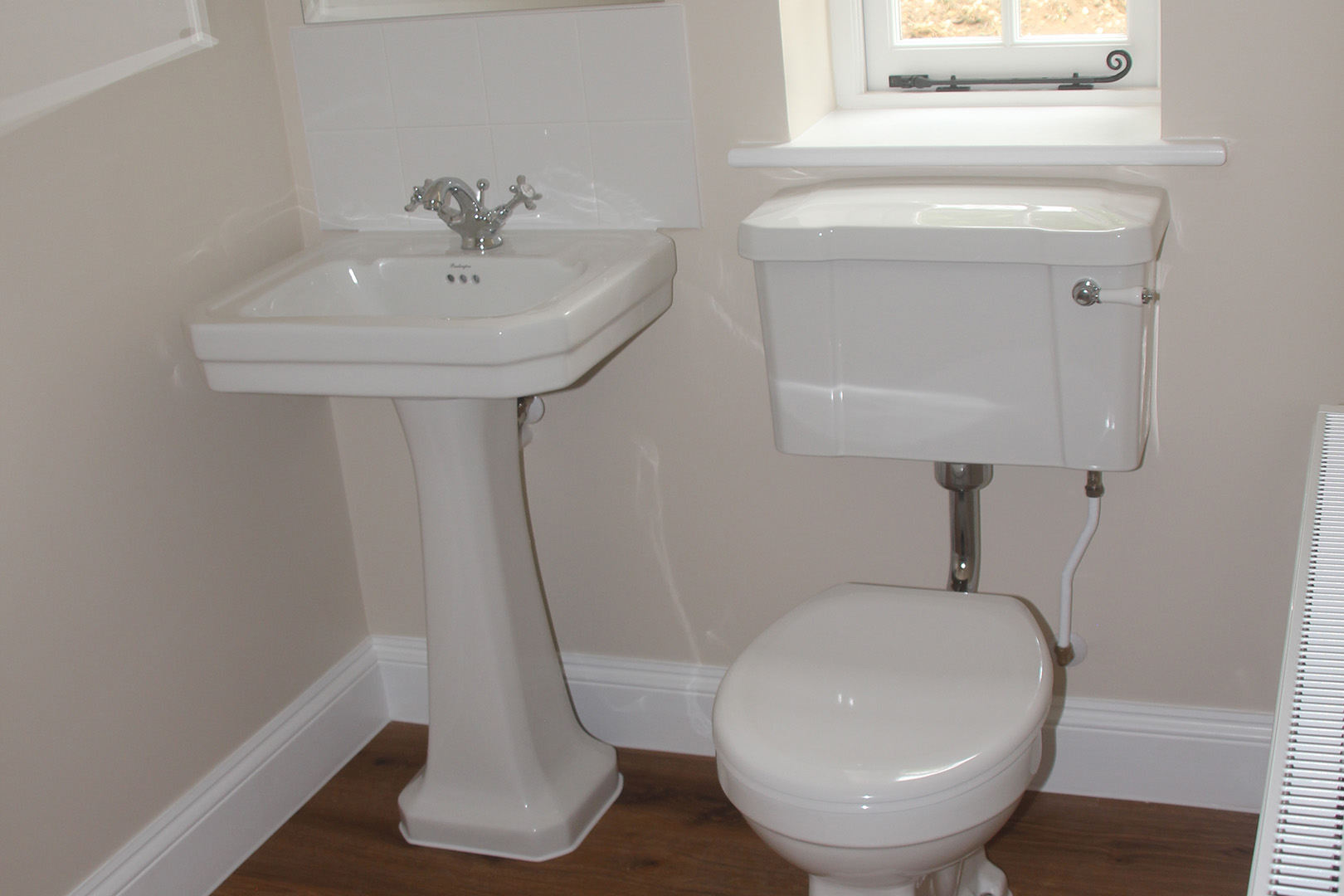
The property was then fully refurbished including tanking to the ground floor walls, complete mechanical and electrical installation with oil fired boilers to each property.
The Challenges of the Project
The project was a challenging one due to the instability of the structure left by the fire and compliance with listed building requirements in relation to sourcing suitable salvaged materials. This necessitated meticulous planning and innovative engineering solutions to ensure safety and structural integrity. Additionally, coordinating with heritage conservation authorities added another layer of complexity, requiring careful documentation and adherence to strict guidelines throughout the process.